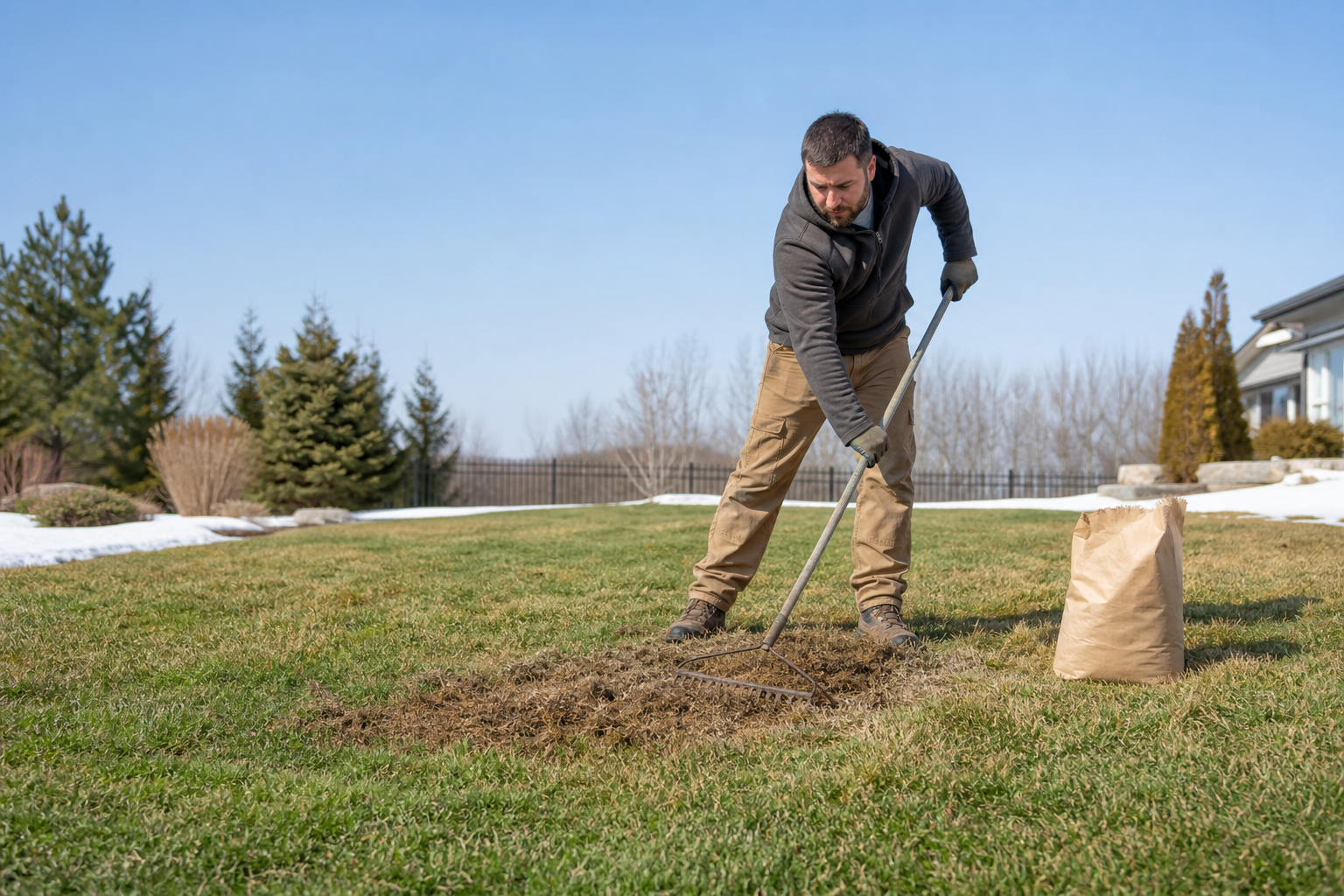
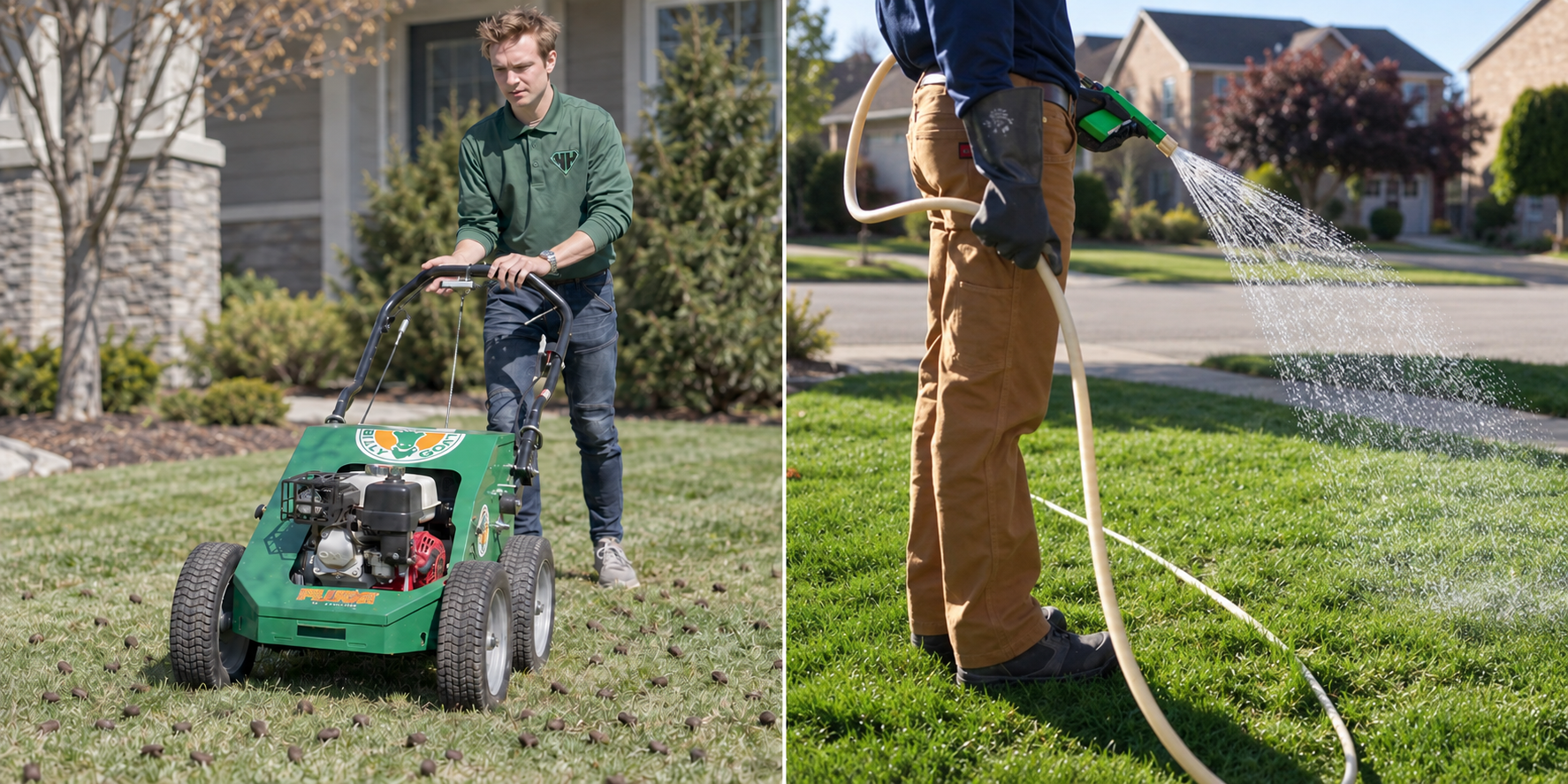
If you have been researching lawn care recently, you have likely stumbled into the latest industry debate: Liquid Aeration versus Deep-Core Aeration.
On one side, traditionalists insist that pulling physical dirt plugs with heavy machinery is the only way to save a struggling lawn. On the other side, new liquid aeration products promise to loosen soil and improve drainage with a simple, mess-free spray.
As Edmonton’s trusted lawn care experts, we constantly review turfgrass science to give our Neighbours the best results. The truth is, much of the online debate completely misses the mark. It is not a rivalry between the two methods; it is a choice between structural physics and soil chemistry.
Here is the definitive, science-backed truth about aeration, how it interacts with Edmonton’s notoriously dense clay, and why the best lawns actually utilize both.
The Physics: Why Core Aeration is Non-Negotiable
Edmonton lawns are built on heavy, dense clay. Over time, heavy winter snowpack and summer foot traffic squeeze the air out of the soil, locking the clay particles together like concrete.
To fix severe physical compaction, you need a physical solution. Deep-Core aeration (also known as mechanical aeration) uses a machine to physically remove soil cores 2 to 3 inches deep.
University turf specialists universally recommend this method for heavily compacted, clay-based soils. Here is why it works:
- Mass Removal: You cannot relieve extreme pressure in a tightly bound area without removing mass. Removing physical plugs gives the surrounding compacted clay immediate room to expand and decompress.
- Instant Channels: Core aeration creates immediate pathways for air, water, and nutrients to reach the root zone.
- The Seed Bed: If you are overseeding, core aeration is the gold standard. The physical holes provide a protective pocket for grass seeds to fall into, ensuring high germination rates.
The Verdict: Liquid products cannot physically remove soil or mechanically fracture heavily compacted hardpan layers. If your lawn is severely compacted, mechanical core aeration is the mandatory first step.
The Chemistry: How Liquid Aeration Actually Works
If liquid aeration doesn't pull plugs, is it just marketing fluff? Absolutely not.
While it cannot fix severe physical compaction in the short term, liquid aeration is a highly effective tool backed by soil chemistry. These liquid formulas typically contain two main active ingredients: soil surfactants (wetting agents) and humic substances.
Instead of tearing into the lawn, liquid aeration works at a microscopic level to change how soil particles interact.
- Surfactants: These reduce soil surface tension. If your clay soil has become hydrophobic (water-repelling), surfactants help water and liquid fertilizers penetrate the surface rather than run off.
- Humic Acid & Kelp: These organic compounds act as food for beneficial soil microbes. Over time, humic substances help bind microscopic clay particles into more stable "aggregates". This gradual process improves the soil structure and encourages tiny pore spaces to reopen.
The Verdict: Liquid aeration is an exceptional soil conditioner. It is perfect for maintaining soil health between mechanical aerations, treating mild compaction, or improving water infiltration during dry spells.
Better Together: The Ultimate Fall Strategy
Experts note that when a wetting agent (liquid aeration) is used in combination with core aeration, the positive effects on the lawn are amplified.
Think of core aeration as the heavy lifting—the surgical intervention required to instantly open up suffocating clay. Liquid aeration is the premium follow-up care. Once the mechanical aerator has opened those deep macro-channels, applying a liquid aerator allows humic acids and surfactants to penetrate even deeper into the soil profile, conditioning the earth from the inside out.
Because liquid aeration and core aeration work so perfectly together, we suggest combining their strengths.
Keep an eye on your inbox—early booking for our Fall Prep opens soon!
References
- Mitra, S., Vis, E., Kumar, R., Plumb, R., & Fam, M. (2006). Wetting agent and cultural practices increase infiltration and reduce runoff losses of irrigation water. Biologia, 61, S353–S357. Research on established turfgrass found that core aeration, sand topdressing and a wetting agent improved infiltration and reduced surface runoff. The experiment involved loamy sand rather than Edmonton clay.
- Piccolo, A., Pietramellara, G., & Mbagwu, J. S. C. (1997). Use of humic substances as soil conditioners to increase aggregate stability. Geoderma, 75, 267–277. Investigates humic substances as soil amendments for improving aggregate stability, providing relevant background for their potential soil-conditioning role.
- Cooper, R. J., Liu, C., & Fisher, D. S. (1998). Influence of Humic Substances on Rooting and Nutrient Content of Creeping Bentgrass. Crop Science. Greenhouse experiments found improved rooting from incorporated granular humate and increased phosphorus uptake from some humic treatments in sand-grown turf. Liquid foliar treatments did not increase root growth.
- Colorado State University Extension, PlantTalk Colorado. Lawn Aeration. Explains how mechanical core aeration reduces compaction and helps water and fertilizer reach the root zone.
- Colorado State University Extension, PlantTalk Colorado. Proper Lawn Aeration. Provides guidance on core depth, hole spacing, soil moisture and overseeding after aeration.