Key Takeaways
- Dethatching is not an automatic yearly task. Measure the thatch layer in a turf sample rather than judging only by how the lawn feels.
- A thin thatch layer is normal; management depends on depth and symptoms. Aggressive work can damage turf that is not ready to recover.
- Dethatching removes excess thatch, while core aeration targets compacted soil. Choose the treatment for the diagnosed problem and suitable growth conditions.
Dethatching is not an annual requirement for an Edmonton lawn. A small thatch layer is normal and can protect the soil surface. The question is whether thatch has become thick enough to interfere with water movement, rooting or turf health.
What Is Thatch?
Thatch is the layer of partially decomposed stems, crowns, roots and other plant tissue between the green turf and the soil surface. Grass clippings are not a major cause of thatch because they are mostly water and break down relatively quickly.
How Much Thatch Is Too Much?
University extension guidance generally treats a thatch layer of about 1/2 inch (1.3 cm) or less as normal. When the layer exceeds roughly 1/2 inch, management may be warranted depending on the lawn and symptoms.
Do not decide based on how “spongy” the lawn feels alone. Cut a small wedge of turf and measure the brown fibrous layer between the green vegetation and the soil.
How Often Should You Dethatch?
There is no useful schedule such as “every two years” or “every spring.” Dethatch only when an actual thatch problem has developed.
Some well-managed lawns may go many years without needing mechanical dethatching. Others, especially highly fertilized or vigorously growing turf, may build thatch more quickly.
When Is the Best Time to Dethatch?
For cool-season turf, late summer through early fall is generally the preferred period because the lawn is actively growing and can recover from the disruption. Aggressive early-spring power raking can damage turf that is still recovering from winter.
What Does a Power Rake Do?
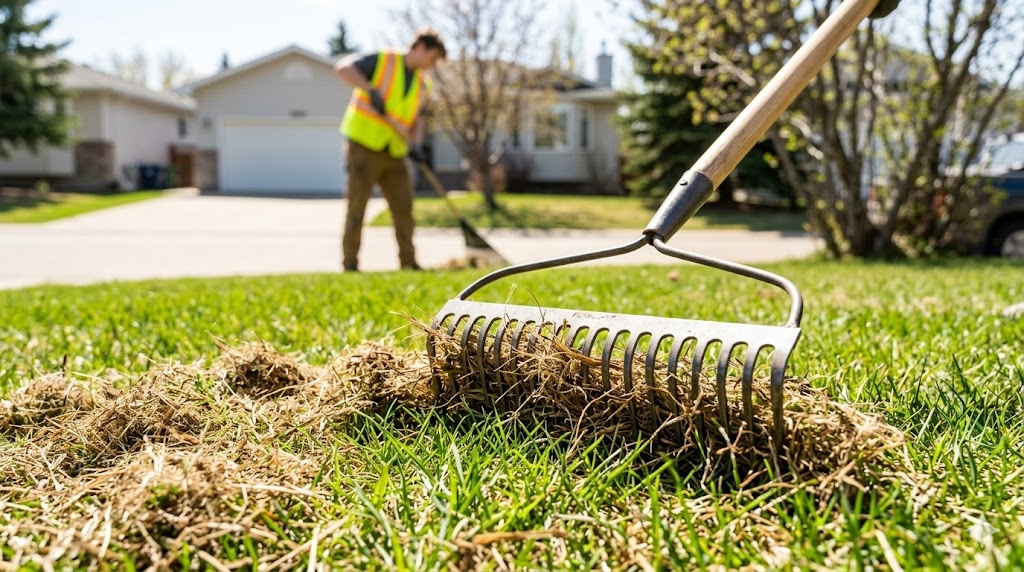
A vertical mower or dethatching machine uses rotating tines or blades to pull excess thatch from the turf. It can remove a large amount of material, but it also disturbs healthy grass.
That is why mechanical dethatching should be matched to a measured thatch problem rather than treated as routine spring cleanup.
Is Core Aeration Better Than Dethatching?
They solve different problems.
- Dethatching: physically removes an excessive thatch layer.
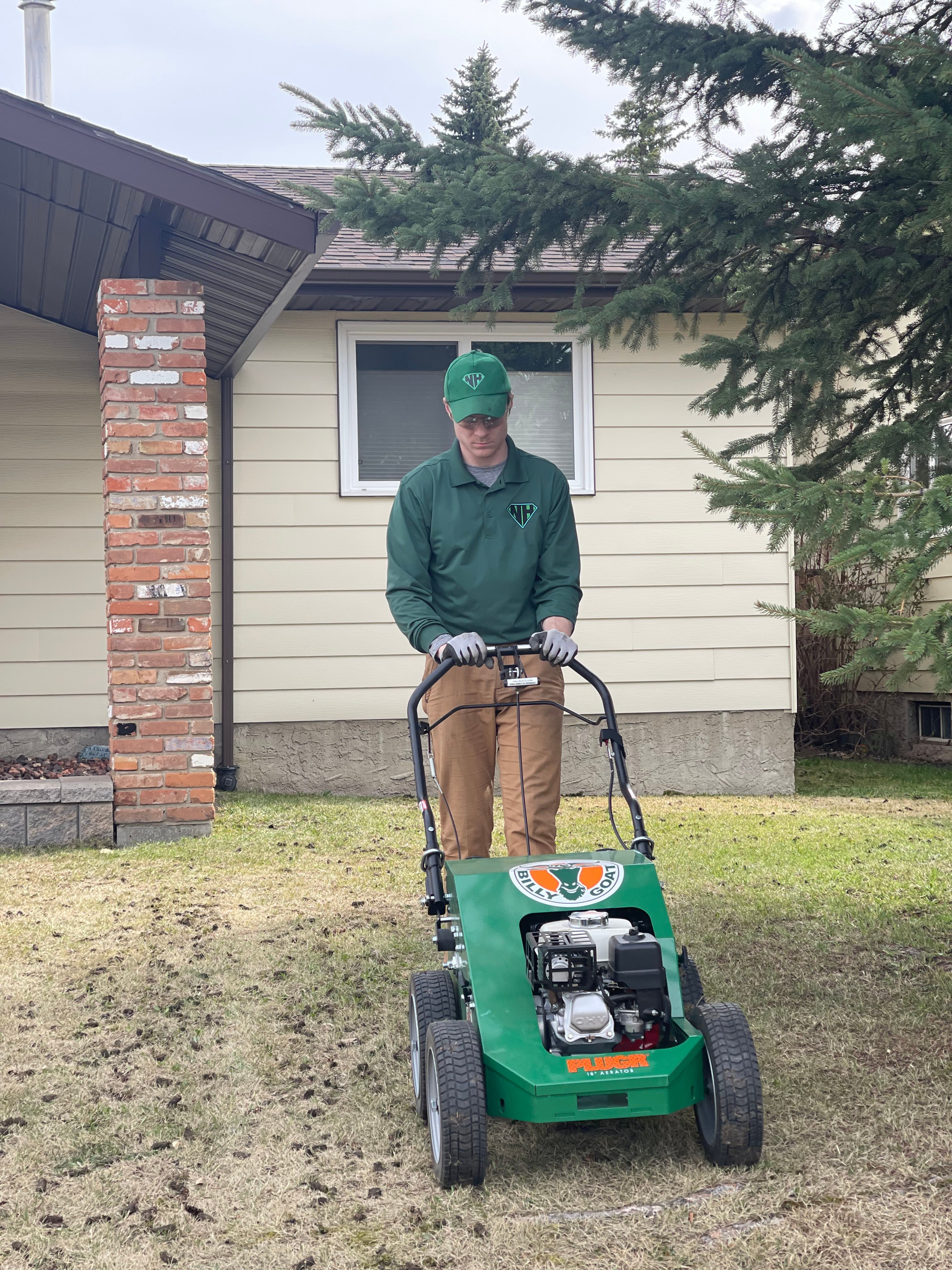
- Core aeration: removes plugs of soil to relieve compaction and improve air and water movement.
Core aeration can also help slow thatch accumulation by improving soil conditions and bringing soil microorganisms into contact with surface organic matter. But aeration does not instantly remove a severe thatch layer.
When Aeration Makes More Sense
If the lawn's main problem is hard, compacted soil rather than a thick thatch layer, core aeration is usually the more appropriate treatment.
Late summer through early fall is generally the preferred aeration window for cool-season lawns. Spring aeration can still be useful when compaction is severe, but it is not automatically the best timing.
How to Reduce Future Thatch Buildup
- Avoid excessive nitrogen fertilization.
- Mow frequently enough to follow the one-third rule.
- Leave normal grass clippings on the lawn rather than assuming they create thatch.
- Address compaction and poor drainage where they are limiting decomposition and root growth.
- Water deeply and appropriately rather than keeping the surface constantly wet.
Does Neighbourhood Heroes Dethatch Lawns?
Neighbourhood Heroes does not currently offer a dedicated dethatching or power-raking service. We do offer deep-core aeration for lawns where compaction is the primary problem.
If you are unsure whether the lawn has a thatch problem or a compaction problem, measure the thatch layer before choosing a service.
Bottom Line
Dethatch based on measured thatch thickness, not the calendar. A thin layer is normal. If thatch becomes excessive, late-summer or early-fall dethatching may be appropriate. If the problem is compacted soil, core aeration addresses a different and often more relevant issue.


No Comments Yet
Let us know what you think