Key Takeaways
- Mark garden-bed edges before snowfall so tools and snow piles are less likely to damage plants or irrigation features.
- Avoid piling dense snow on beds, and direct meltwater and de-icer runoff away from sensitive planting areas where practical.
- Use controlled clearing motions away from beds. Apply mulch at a suitable depth and keep it away from trunks and woody stems.
Winter snow clearing is essential for keeping your walkways and driveways safe—but it can also put your garden beds at risk. From shovel damage to salt runoff, your landscaping can take a beating if it’s not properly protected.
The good news? With the right preparation and snow-clearing techniques, you can maintain curb appeal, protect your plants, and avoid costly spring repairs.
Here’s how to protect your garden beds all winter long.
❄️ 1. Create Physical Barriers Before Heavy Snowfall
Garden beds close to driveways or walkways are prime targets for accidental snow dumping.
Best protective barriers include:
-
Snow stakes: Inexpensive and easy to install
-
Low fencing: Wood, vinyl, or metal works well
-
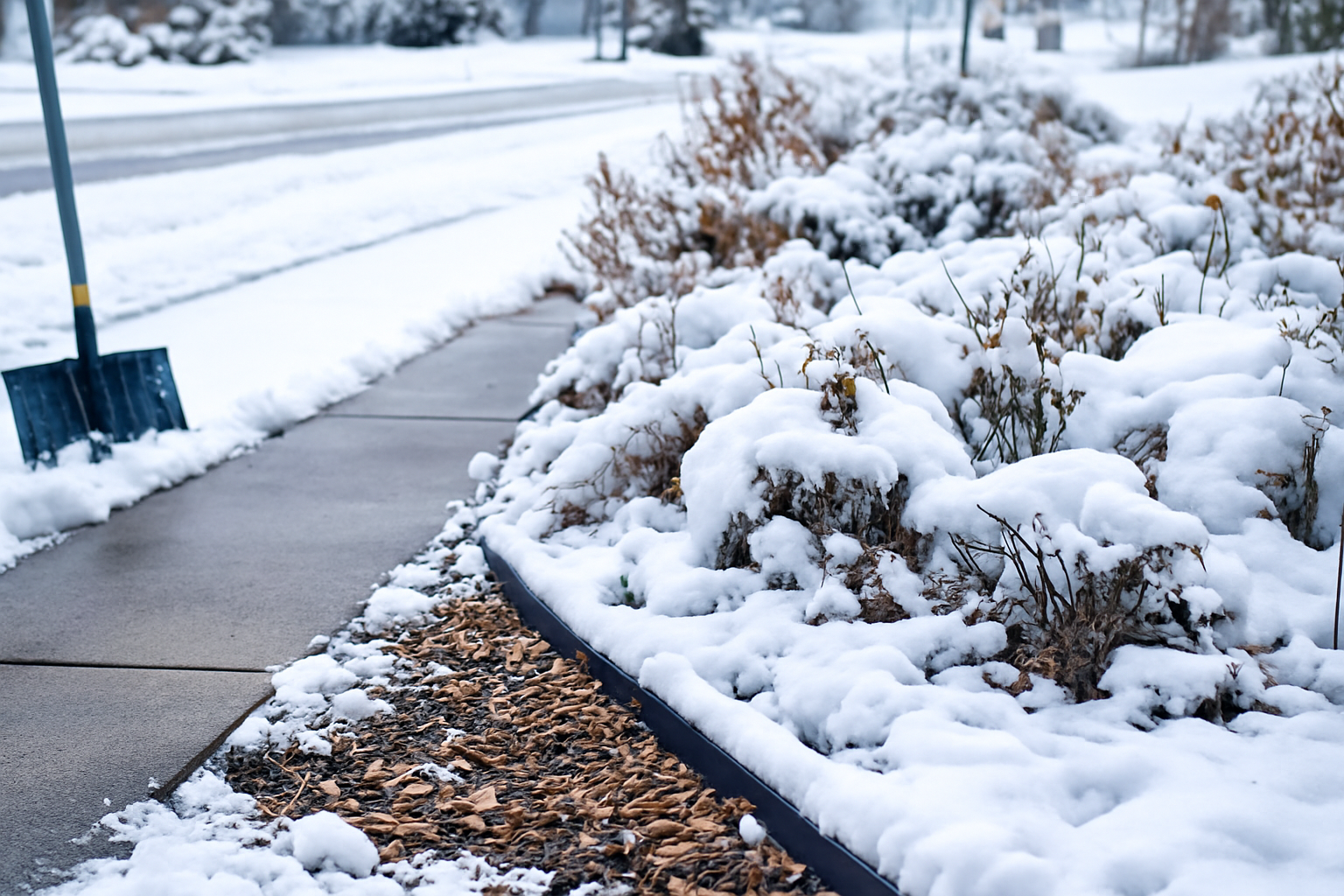
Raised garden bed edging: Helps define boundaries for shovellers or service crews
-
Temporary burlap screens: Reduce wind and salt exposure
These barriers prevent accidental shovel strikes and keep plows or compact snow blowers from pushing snow directly into your plants.
🌱 2. Mulch Your Garden Beds Generously
Mulch creates a protective layer that:
-
Insulates plant roots
-
Reduces soil temperature fluctuations
-
Helps prevent frost heaving
-
Minimizes salt infiltration
Use an appropriate mulch depth for the plants and material, keeping mulch away from direct contact with trunks and woody stems. Excessive mulch can create its own moisture and pest problems.
Pro Tip: Avoid mulching too early—wait until the ground is lightly frozen to deter rodents from nesting.
🚫 3. Avoid Piling Snow on Your Garden Beds
When clearing pathways or driveways, it’s tempting to push snow into open areas—but snow piles can crush dormant plants.
Heavy mounds lead to:
-
Broken branches
-
Soil compaction
-
Delayed spring growth
-
Mold and ice buildup
Designate a safe snow-dump zone away from your landscaping.
If you hire a snow removal service in Edmonton, make sure they know which areas should be avoided.
🧂 4. Watch Out for Salt and Ice Melt Chemicals
Salt is one of the biggest winter threats to garden beds.
Salt exposure can:
To protect your garden beds:
-
Choose de-icing products that are labelled for the intended surface and use, and avoid unnecessary chloride exposure near sensitive landscaping
Keep de-icer application away from garden-bed edges wherever practical.
Manage drainage so concentrated meltwater is not directed into sensitive planting areas. Do not create a berm that redirects water toward foundations or other problem areas.
If salt contamination occurs, flush the area thoroughly once the ground thaws.
🧹 5. Use Proper Shoveling Techniques Near Garden Beds
A small mistake with a shovel can cause big damage.
When clearing snow:
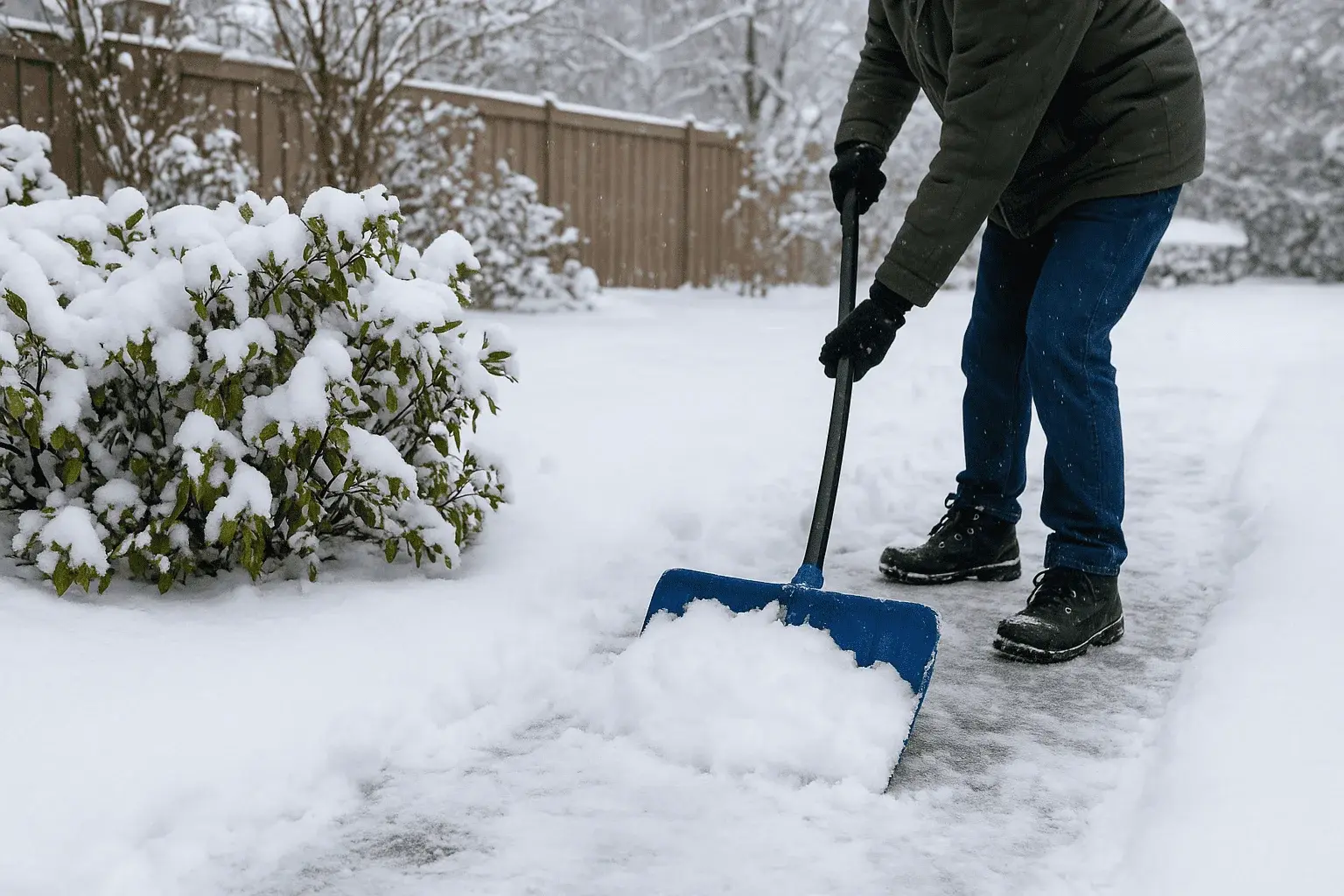
Use a shovel or tool appropriate for the surface and keep the blade away from exposed stems, edging and irrigation components.
-
Shovel away from the garden bed
-
Avoid stabbing downward—use a sweeping motion
-
Remove loose, fluffy snow gently around plant edges
This reduces the chances of cracking edging, uprooting plants, or scraping bark.
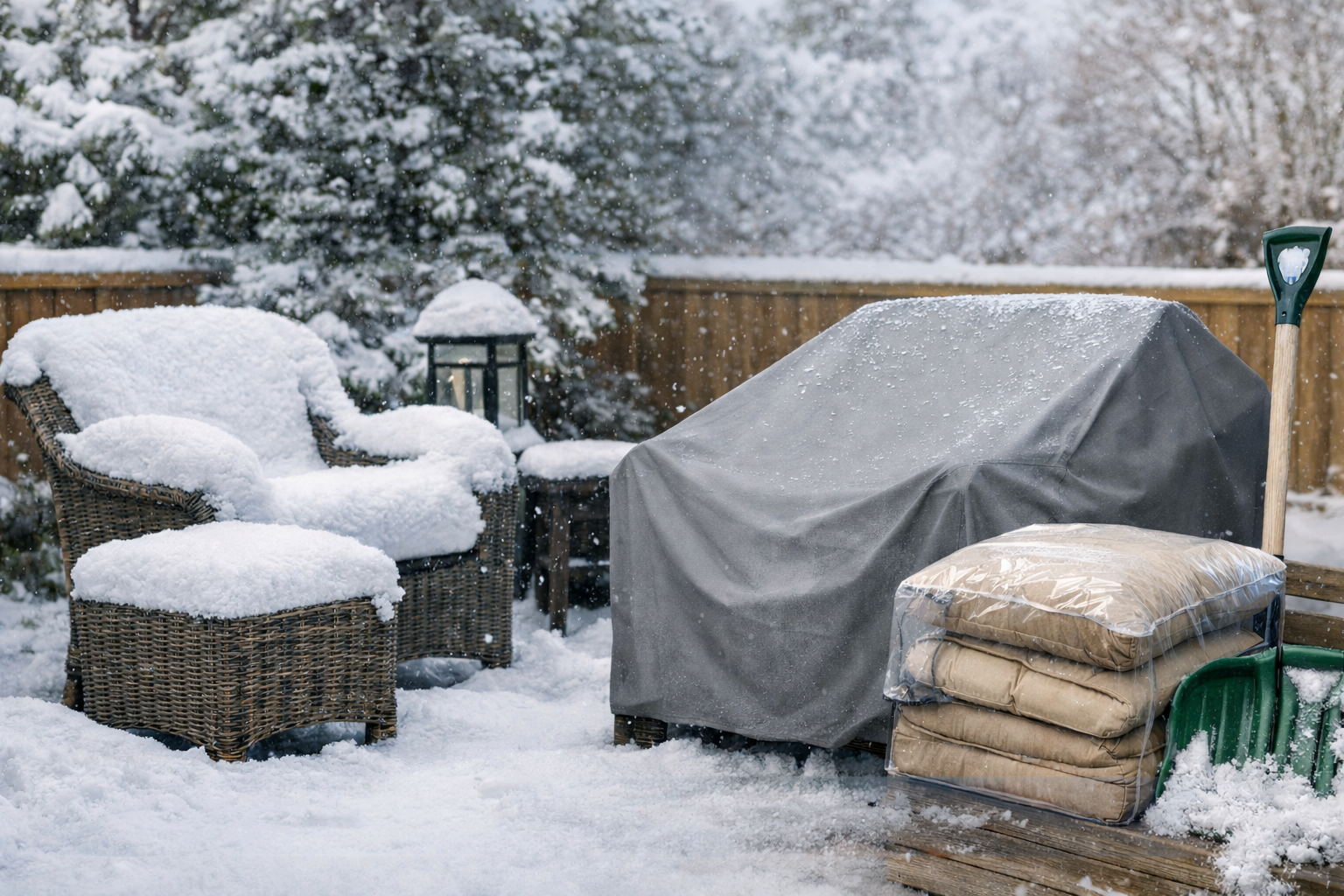
🌬️ 6. Install Wind Barriers for Exposed Beds
If you have garden beds in windy areas, drifting snow and ice can cause uneven coverage or expose delicate plants.
Consider adding:
These help maintain stable snow cover, which is actually beneficial insulation for wintering plants.
🔧 7. Work With a Professional Snow Removal Company
A trained winter maintenance team can:
Use marked bed edges and agreed snow-storage zones to reduce landscaping damage risk
-
Use low-impact techniques around gardens
-
Avoid pushing piles into your yard
Use ice-control products according to the label and limit unnecessary exposure near plants
If you use a professional service like Neighbourhood Heroes, you get crews who understand how to protect your property—not just clear your driveway.
🌼 Final Thoughts: Keep Your Garden Beds Safe All Winter
Good snow-clearing practices can reduce avoidable damage to garden beds, but winter injury can still occur from cold, desiccation, wildlife, freeze-thaw cycles and other factors unrelated to snow removal.
Remember:
-
Create barriers
-
Mulch adequately
-
Avoid piling snow
-
Limit salt exposure
-
Shovel carefully
-
Protect from wind
-
Hire professionals
Taking a little time now will keep your landscaping beautiful and healthy when spring returns.



No Comments Yet
Let us know what you think