Key Takeaways
- Observe where wind repeatedly deposits snow around doors, fence gaps, walls and driveway edges before choosing drift controls.
- Place snow fencing upwind with enough space for the drift to form before the protected area; fencing too close can worsen the problem.
- Keep snow storage clear of access, sightlines and drainage. Sand and ice melt address slippery surfaces, not drifting snow.
Snow drifts form when wind picks up loose snow and deposits it where airflow slows or changes direction. Around Edmonton homes, that can mean repeated buildup near driveways, doors, fences and exposed walkways even when the total snowfall is modest.
Why Snow Drifts Form
Drifting depends on wind direction, wind speed, available loose snow and the shape of buildings, fences, landscaping and open spaces. Two neighbouring properties can experience very different drifting patterns during the same storm.
1. Learn Where Your Property Drifts
Watch where snow repeatedly accumulates after windy events. Common areas include:
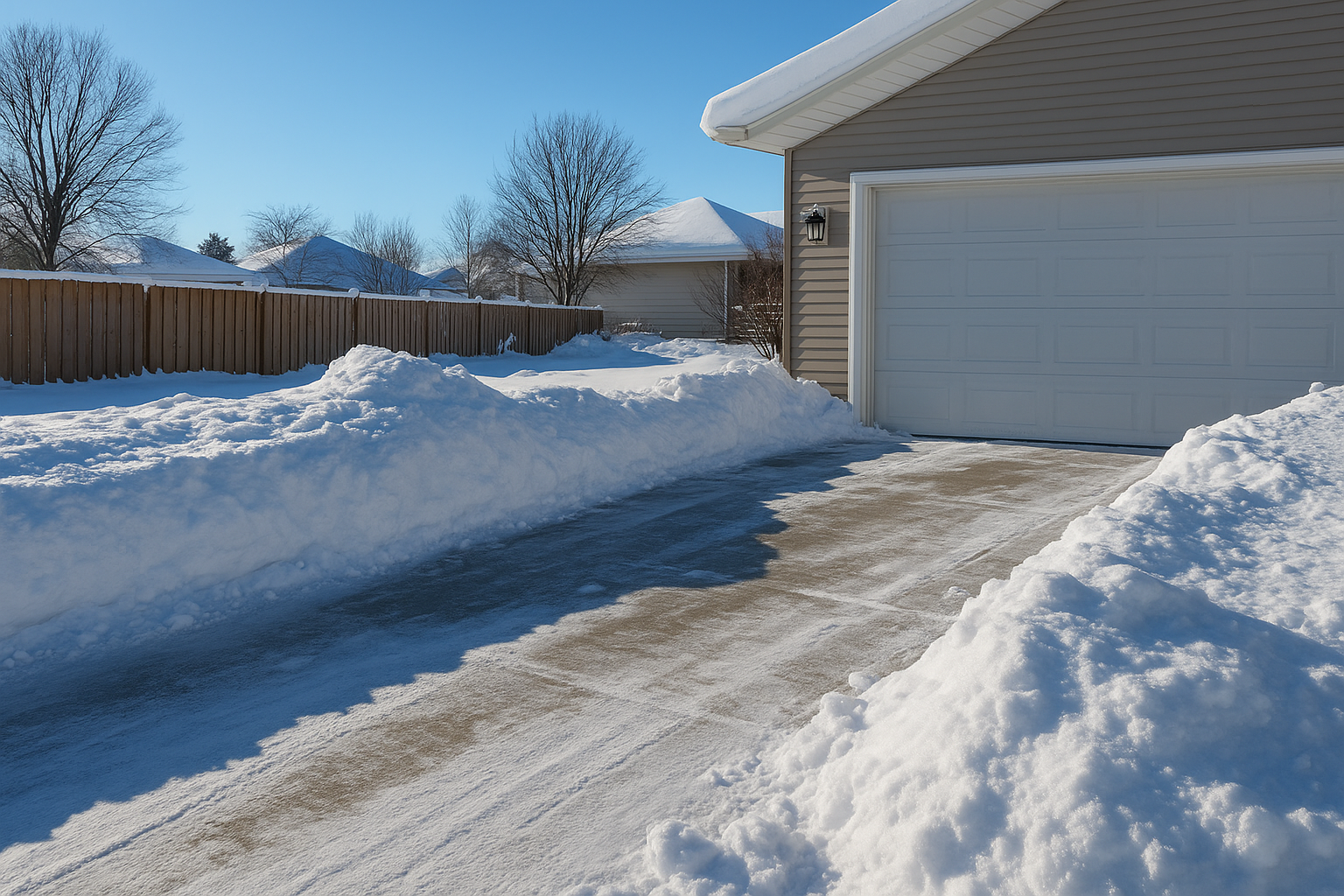
- Garage doors and driveway edges
- Front entrances and steps
- Fence corners and gaps
- Leeward sides of buildings
- Open walkways exposed to prevailing winds
Photograph recurring drift locations during winter so you can adjust snow storage or windbreak placement before the next season.
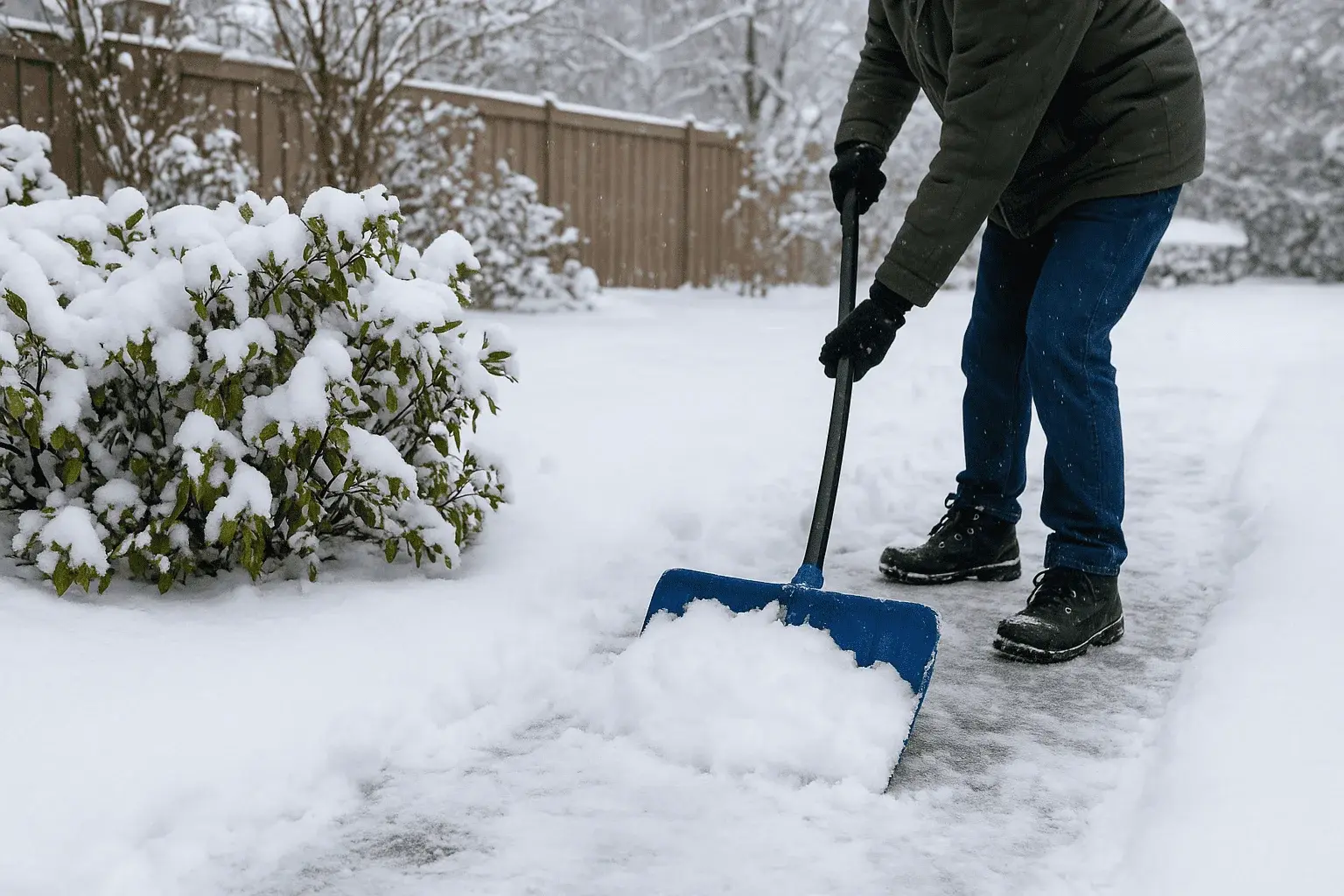
2. Remove Loose Snow From High-Priority Areas
Prompt clearing reduces the amount of loose snow sitting on the driveway and walkways, but it cannot stop snow from blowing in from lawns, neighbouring areas or open spaces.
Neighbourhood Heroes dispatches when snowfall reaches at least 0.5 cm and for freezing-rain events. Our residential service includes unlimited triggered visits with route completion promised within 24 hours after snowfall ends. Drifting by itself does not automatically create an off-schedule service visit.
3. Use Snow Fencing Correctly
Snow fencing can help manage drifting when it is placed upwind of the area you want to protect and far enough away for the drift to form before it reaches the driveway or walkway.
Putting a snow fence directly beside the area you want clear can create a new drift in the wrong place. Fence height, porosity, prevailing wind and setback distance all matter, so larger installations should be planned rather than improvised.
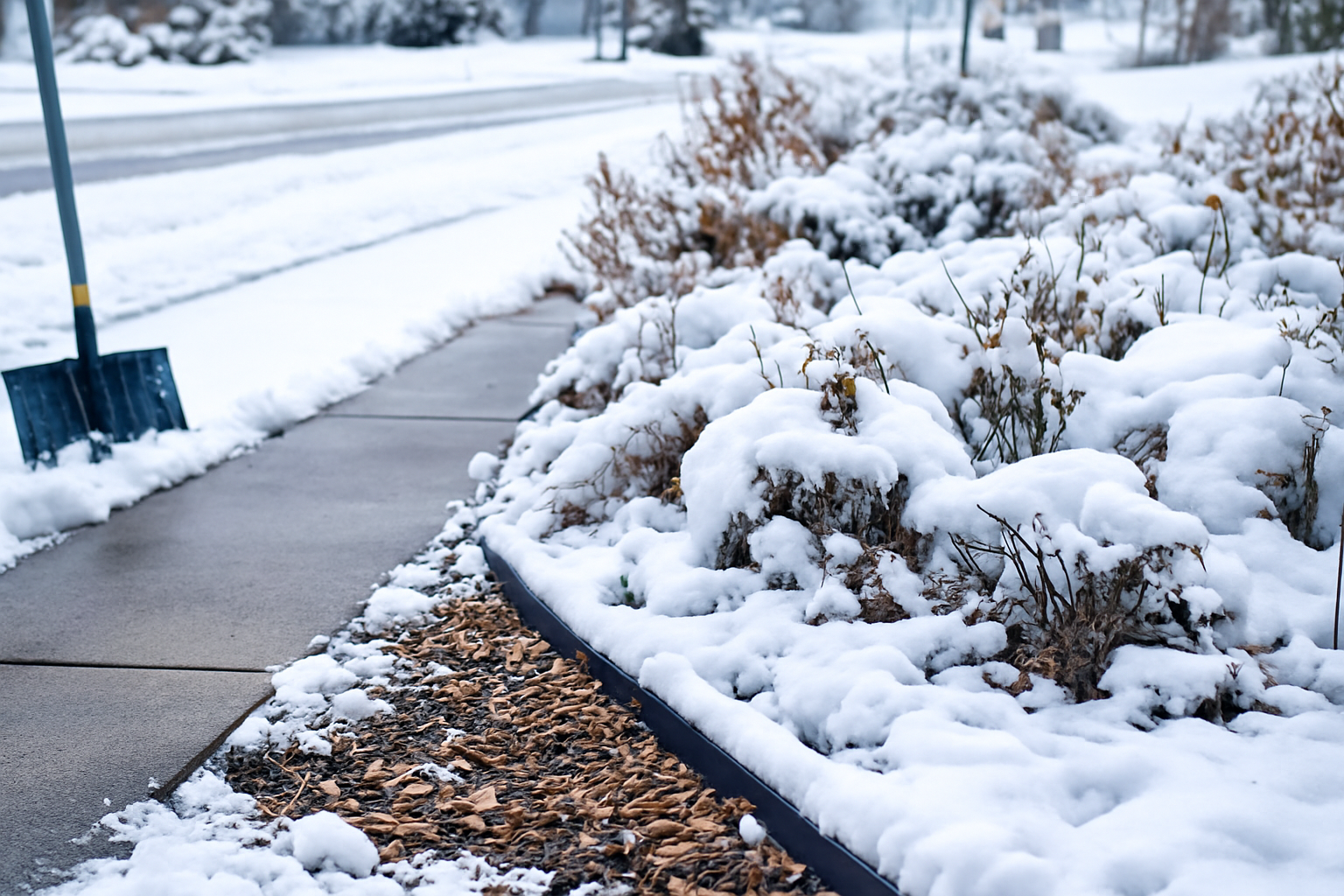
4. Use Landscaping as a Long-Term Windbreak
Rows of shrubs or evergreens can slow wind and change where snow is deposited, but they should be positioned with mature size, sightlines, utilities, drainage and property boundaries in mind.
Dense landscaping planted immediately beside a driveway can also create unwanted drifting, so windbreak design should consider where the captured snow will actually settle.
5. Choose Snow-Storage Areas Carefully
Do not place snow where it will:
- Block sightlines at driveways or intersections
- Cover fire hydrants, utility access or required sidewalks
- Press against vulnerable shrubs or entrances
- Send meltwater toward the foundation
- Melt and refreeze across high-use walking areas
Snow storage should support drainage and leave room for additional accumulation later in the winter.
6. Ice Melt and Sand Do Not Prevent Drifting
Ice melt can help loosen bonded ice, and sand can improve traction. Neither one prevents airborne snow from drifting.
Use ice-control products only for slippery surfaces, not as a snow-drift strategy, and follow the product label to limit unnecessary impact on concrete, vegetation and waterways.
7. Be Careful With Deliberate Snow Banks
Building a snow bank as a wind barrier can sometimes change airflow, but it can also create larger drifts, block drainage or become a visibility problem. Do not build large banks near roads, driveway sightlines, doors or places where spring meltwater could cause trouble.
8. Know the Limits of a Snow-Removal Service
A snow-removal provider can clear covered areas after qualifying weather events, but it cannot eliminate wind-driven drifting between visits. If your property experiences chronic drifting, the long-term solution may involve windbreak design, snow fencing, snow-storage changes or site-specific landscaping work in addition to regular clearing.
Final Thoughts
The best way to manage snow drifts is to understand how wind moves across your specific property. Combine strategic clearing with correctly placed windbreaks and well-planned snow storage rather than relying on ice melt or frequent off-schedule clearing.
For current residential snow-removal coverage, visit our Snow Removal Services page.



No Comments Yet
Let us know what you think