Key Takeaways
- Sand and fine gravel improve traction on ice but do not melt it; sweep up excess after thaw.
- Calcium magnesium acetate is a non-chloride option, while beet-based additives are often part of brine blends. Effectiveness depends on formulation and temperature.
- No de-icer is universally impact-free. Combine mechanical clearing and traction measures with the minimum effective labelled amount.
Eco-Friendly Snow and Ice Solutions
Winter safety involves balancing traction, ice control, surface protection and environmental impact. Traditional rock salt is effective but can contribute to corrosion and chloride runoff when overused. The alternatives below can reduce salt use, but none is impact-free in every situation.
1. Sand or Gravel for Traction
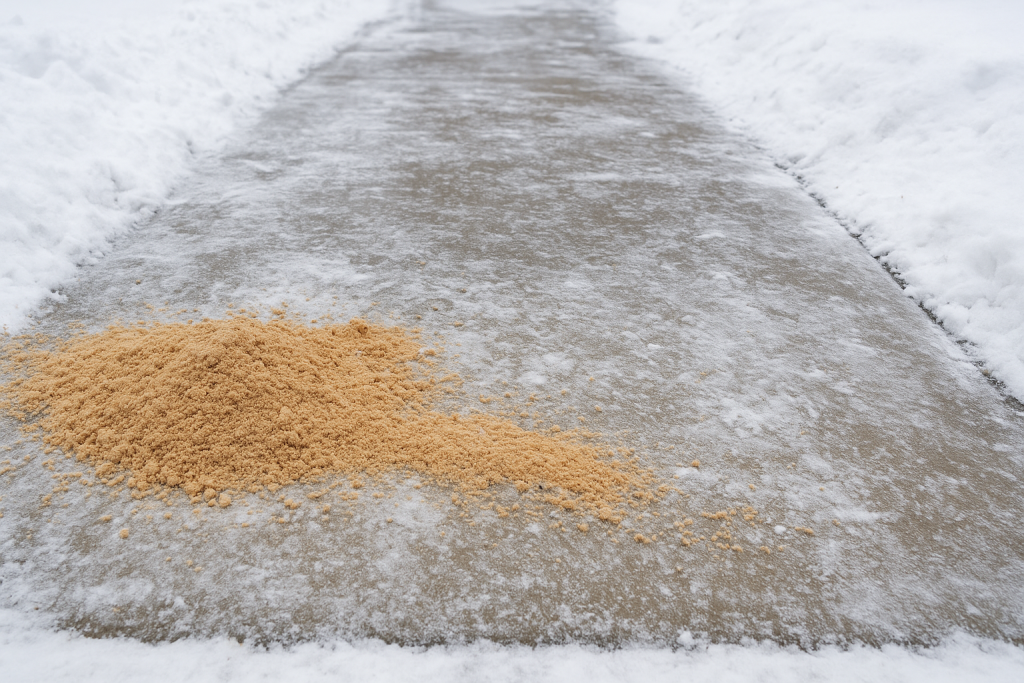
Sand and fine gravel do not melt ice, but they can improve traction on slippery surfaces. They are useful when temperatures are too low for some de-icers to work effectively or when you want to reduce chemical use. Sweep up excess material after the thaw so it does not enter storm drains unnecessarily.
2. Use Traction Materials Carefully
- Sand or grit: Provides traction but does not melt ice.
- Kitty litter: Can add some grip in an emergency, but many products become messy when wet and are not designed as a primary winter traction material.
For tips on keeping sidewalks clear and safe, see How Often Should I Clear Snow From My Sidewalks?
3. Calcium Magnesium Acetate (CMA)
- CMA is a non-chloride deicer that is generally less corrosive to metals and concrete than traditional chloride salts.
- Its effectiveness depends on temperature, concentration and the specific product, so follow the manufacturer’s directions rather than assuming it will perform equally well in all cold conditions.
4. Beet-Based De-Icing Blends
Beet-derived additives are sometimes blended with brines to improve low-temperature performance and reduce corrosion compared with untreated salt brine. They are not usually a stand-alone replacement for every de-icer, and environmental impact still depends on the full formulation and application rate.
Check out What Is the Best Way to Protect Plants During Snow Removal? for landscaping considerations.
5. Heated Mats and Snow-Melting Systems
- Proactively prevent ice formation
- Can reduce the need for surface-applied de-icers when properly installed and operated
- Ideal for high-traffic areas
Tips for Eco-Friendly Snow Management
- Use only the minimum amount of deicer necessary
- Sweep surfaces before applying products
- Combine traction methods with melting solutions for maximum safety
- Avoid overusing chemical products near plants
For more guidance, see our older posts:



No Comments Yet
Let us know what you think