

How to Get Rid of Thistle in Your Lawn: Edmonton & Alberta Guide
By Cole Maimann on Oct 24, 2026, 11:41:52 PM
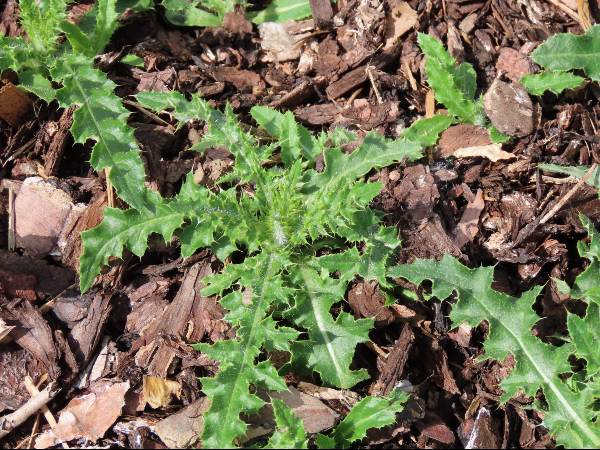
Canada thistle is one of those weeds that makes homeowners question whether pulling weeds accomplishes anything at all.
You pull one plant.
Two more appear.
You mow the patch.
It comes back.
You spray the visible leaves, think you've finally won, and a few weeks later another shoot pops up a metre away.
That happens because the part of Canada thistle you can see is only part of the plant. Under your lawn is a persistent network of creeping roots capable of producing new shoots far from the original stem.
And in Alberta, Canada thistle isn't merely an annoying lawn weed. It is officially designated as a noxious weed under Alberta's Weed Control Act, which means property owners and occupiers are responsible for controlling it.
If Canada thistle has established itself in your Edmonton lawn, the solution is not one heroic afternoon of pulling weeds. You need to attack its ability to flower, rebuild energy and regenerate from its underground root system.
Here's how.
Our weed control services in Edmonton can remove thistle in ~2 weeks!
Key Takeaways
- Canada thistle is a creeping perennial weed that spreads through both seed and an extensive underground root system.
- The correct common name is Canada thistle, although many homeowners search for it as “Canadian thistle.”
- It is officially classified as a noxious weed in Alberta and must be controlled.
- Pulling or mowing the visible stems once will rarely eliminate an established patch because the roots remain alive underground.
- Small, newly established plants can sometimes be removed manually if enough of the root system is removed.
- Established patches usually require repeated control rather than one treatment.
- Spring and early-summer treatments can weaken active growth, but late summer and fall are especially important because the plant begins sending energy back toward its root system.
- Prevent flowering and seed production whenever possible.
- A thick, healthy lawn helps reduce new Canada thistle establishment but will not necessarily eliminate an existing root colony.
- If you're using herbicides, use only products registered for the intended turf and application site and always follow the Canadian label.
The Short Answer: How Do You Get Rid of Canada Thistle?
To get rid of Canada thistle in a lawn, combine seed prevention, repeated suppression of new shoots, proper lawn health and appropriately timed systemic weed control.
For an established infestation:
- Identify the weed correctly.
- Do not allow it to produce mature seed.
- Mow or cut regrowth repeatedly rather than only once.
- Treat actively growing plants with an appropriate selective broadleaf herbicide labelled for the site.
- Pay particular attention to late-summer and fall regrowth while plants are still healthy and green.
- Monitor the same area the following spring.
- Strengthen thin turf so new seedlings have less open space to establish.
A small infestation may be controlled relatively quickly.
A mature root colony may take repeated treatment across more than one growing season.
That does not necessarily mean the treatment failed. Canada thistle is biologically built to survive damage above the soil.
What Is Canada Thistle?
Canada thistle (Cirsium arvense) is a creeping perennial broadleaf weed.
Despite the name, it is not originally Canadian. It was introduced to North America from Europe and has become widespread across much of Canada and the northern United States.
It reproduces in two ways:
- by seed
- vegetatively through its underground roots
For lawn owners, that second method is the real problem.
Canada thistle produces horizontal creeping roots capable of sending up new shoots in other parts of your lawn. University extension research has documented lateral roots spreading several metres during a growing season.
Those roots also contain numerous buds capable of generating new growth.
That is why what looks like ten separate thistle plants may actually be connected to the same underground colony.
Is Canada Thistle a Noxious Weed in Alberta?
Yes.
Canada thistle is officially listed as a noxious weed in Alberta.
Under Alberta's Weed Control Act, noxious weeds must be controlled to prevent their continued growth and spread.
This distinction matters because Canada thistle is not treated the same way as an ordinary nuisance weed such as a dandelion.
The City of Edmonton also provides guidance for regulated invasive weeds and expects property owners to manage noxious weeds on private property.
If you remove Canada thistle plant material in Edmonton, invasive plant material should be disposed of in the garbage rather than the green compost bin to reduce the chance of further spread.
How to Identify Canada Thistle
Before treating any thistle, make sure you know what you're dealing with.
Several weeds look similar, and control strategies can differ significantly.
Canada Thistle Leaves
Look for:
- alternating leaves along the stem
- wavy or irregularly lobed leaf edges
- sharp spines along the leaf margins
- leaves that become smaller farther up the plant
The plant often begins the season as a low-growing rosette before upright stems develop.
Canada Thistle Flowers
Mature plants produce relatively small flower heads that are usually:
- purple
- pink
- occasionally white
Flowers normally occur in clusters near the ends of branches.
Canada Thistle Stems
One useful identification clue is the stem.
Unlike some other thistles, Canada thistle stems generally do not have the large, heavily spined wings that make bull thistle look especially vicious.
Mature plants can reach roughly a metre or more in height when they are allowed to grow without mowing.
The Biggest Clue: It Grows in Patches
If thistles keep appearing in a spreading patch rather than as isolated individual plants, Canada thistle should be high on your list of suspects.
Its underground creeping roots create colonies that gradually expand outward.
You may even see new shoots several feet from the original plant.
Canada Thistle vs. Bull Thistle vs. Sow Thistle
Homeowners frequently confuse these plants.
Canada Thistle
- Purple or pink flowers
- Perennial
- Spreads aggressively through underground roots
- Often forms expanding patches
- Stems are generally much less spiny than bull thistle
Bull Thistle
- Purple flowers
- Typically grows as a biennial
- Reproduces primarily by seed rather than a huge creeping root network
- Usually has much more aggressively spined stems and foliage
- Often appears as individual plants rather than one interconnected colony
Sow Thistle
- Usually has yellow flowers
- Leaves may resemble thistle leaves
- Often produces a milky sap when damaged
If the plant has yellow dandelion-like flowers, you're probably not looking at Canada thistle.
Why Canada Thistle Keeps Coming Back
The answer is underground.
Canada thistle develops both vertical and horizontal roots. The horizontal roots can spread outward and contain buds capable of generating completely new shoots.
That gives the plant a massive underground energy reserve.
When you cut off one stem, the root system is still alive.
When you mow it, the root system is still alive.
When you pull a stem and leave much of the root behind, the root system is still alive.
The plant simply spends stored energy to produce another shoot.
Even relatively small root fragments can potentially generate new growth.
This is what makes Canada thistle fundamentally different from weeds that can be eliminated by pulling out a single taproot.
Does Pulling Canada Thistle Work?
Sometimes — but usually only on very small or newly established infestations.
If you have a single young plant, carefully digging out as much of its root system as possible can be worthwhile.
The problem begins once a mature underground network develops.
At that point, repeatedly yanking off stems may remove the visible weed while leaving most of the plant alive below ground.
Aggressively digging through an established colony can also break the root system into additional pieces capable of producing shoots.
So don't think of an established Canada thistle patch as ten weeds that need to be pulled.
Think of it as one underground colony with ten visible shoots.
That's a much more accurate mental model.
Does Mowing Kill Canada Thistle?
Not from one mowing.
But repeated mowing can still be useful.
Every time Canada thistle produces new leaves and stems, the plant has to spend energy stored in its roots.
If you repeatedly remove that new growth before the plant has enough time to fully replenish those reserves, you gradually stress the underground system.
Repeated mowing or cutting can also:
- prevent flowering
- reduce seed production
- prevent tall mature stems from developing
- weaken the plant over time
For established patches, repeated cutting every few weeks during active growth can be substantially more useful than mowing once and forgetting about it.
The important word is repeated.
One mowing improves appearance.
Repeated suppression is a control strategy.
Don't Spread Mature Seed
If Canada thistle has already developed mature fluffy seed heads, don't simply drive your mower through the patch and distribute them across the property.
Remove and bag mature reproductive material first.
In Edmonton, put removed invasive plant material in the garbage rather than compost.
When Is the Best Time to Kill Canada Thistle?
This is where a lot of lawn advice becomes too simplistic.
There is no magical date on the calendar when Canada thistle suddenly becomes vulnerable.
Growth stage and plant condition matter more than the specific date.
For Edmonton lawns, there are two particularly useful treatment periods.
Spring and Early Summer: Attack Active Growth
Canada thistle begins producing new growth in spring.
Young, actively growing plants provide a good opportunity to begin suppressing the infestation before it flowers and produces seed.
Spring control helps:
- reduce early-season growth
- prevent flowering
- stop seed production
- weaken the plant before summer
- identify the extent of the infestation
In Edmonton, this often makes May and early June important months for monitoring and treatment.
But don't interpret that as “spray on June 1 and you're done.”
A mature Canada thistle colony is unlikely to care what your calendar says.
Late Summer and Fall: Attack the Root System
Fall is particularly important for perennial weed control.
As Canada thistle prepares for winter, it begins moving carbohydrates produced in its leaves downward toward its underground storage system.
That biological process can make appropriately timed systemic control especially valuable.
Instead of focusing only on killing visible leaves, the objective is to move control into the part of the plant that allows it to return next season.
For Edmonton, that generally makes late summer into early fall an important window to watch.
The plant should still have:
- healthy green leaves
- active growth
- enough foliage to absorb treatment
Once heavy frost has severely damaged the leaves or the plant has largely entered dormancy, there is less healthy foliage available for herbicide uptake.
This is why waiting until everything is brown and frozen is not a fall weed-control strategy.
The Best Canada Thistle Control Plan for an Edmonton Lawn
Here's the approach we'd use conceptually.
Step 1: Confirm It Is Actually Canada Thistle
Look for:
- purple/pink clustered flowers
- spiny leaf margins
- mostly non-spiny stems
- repeated shoots appearing in a spreading patch
When in doubt, identify the weed before treating it.
Step 2: Stop Seed Production
Do not allow an infestation to flower freely all summer.
Cut, mow or otherwise manage the top growth before mature seed develops.
Stopping seed will not eliminate the existing roots, but it prevents the existing problem from creating an entirely new generation of problems.
Step 3: Keep Stressing Regrowth
If you're managing the patch mechanically, don't mow it once and declare victory.
Monitor it.
When new shoots return, suppress them again.
The objective is to repeatedly force the plant to draw energy from its roots without allowing it unlimited time to rebuild those reserves.
Step 4: Use Selective Weed Control Where Appropriate
In a lawn, the objective is to control the broadleaf weed without destroying the surrounding turfgrass.
That generally means using an appropriate selective post-emergent broadleaf herbicide registered for the application site.
Systemic herbicides are especially important with perennial weeds because the objective is not merely to burn the leaf surface. The product needs to be absorbed by actively growing foliage and move through the plant.
Always read and follow the Canadian product label.
Do not blindly follow herbicide recommendations from an American lawn-care article. Product registrations, permitted application sites and labels can differ between the United States and Canada.
Step 5: Follow Up in Fall
This is the step many homeowners miss.
You knock it back in spring.
Your lawn looks good in July.
You stop thinking about it.
Meanwhile, surviving Canada thistle quietly rebuilds its root reserves.
Inspect previously affected areas again in late summer and fall.
If healthy regrowth is present, that may be one of the most valuable opportunities to continue controlling the root system.
Step 6: Inspect Again Next Spring
A mature infestation can contain a large underground root network.
If a few shoots emerge next year, don't immediately conclude that everything you did failed.
The population may be dramatically weaker than the year before.
Treat remaining regrowth early rather than letting it rebuild into another mature colony.
Step 7: Repair the Lawn Around It
Once the thistle is controlled, don't leave thin, damaged turf behind.
Bare soil gives weeds an opportunity to establish.
Improve lawn density through appropriate:
- fertilization
- overseeding
- watering
- mowing
- aeration where soil compaction is a problem
Canada thistle can still invade healthy grass, but dense turf creates substantially more competition than a thin, stressed lawn.
Can You Kill Canada Thistle Without Killing the Grass?
Yes.
Canada thistle is a broadleaf weed, while the desirable plants in most Edmonton lawns are turfgrasses.
Selective broadleaf herbicides can target susceptible broadleaf weeds while leaving labelled turfgrass species unharmed when used correctly.
That is very different from a non-selective herbicide, which can damage virtually any green plant it contacts — including your lawn.
For homeowners, the safest rule is simple:
Never assume a weed killer is safe for grass. Read the Canadian label first.
What About Canada Thistle in Rock Beds, Gravel or Garden Beds?
Control becomes more complicated outside turf because desirable plants may be growing near the thistle.
Rock and Gravel Areas
Canada thistle can establish easily in disturbed areas where there is little competition.
Repeated control is important because killing one visible shoot does not remove the underground colony.
Flower and Garden Beds
Be extremely cautious with herbicides around desirable plants.
Many products capable of killing Canada thistle can also seriously damage flowers, shrubs, trees or vegetables.
Small infestations may be managed through careful digging, repeated cutting and persistent monitoring.
For established colonies growing through valuable ornamental plants, precision matters.
Does Vinegar Kill Canada Thistle?
Vinegar may damage or burn the leaves it touches.
That does not make it a reliable solution for an established Canada thistle colony.
The problem is the underground root network.
A treatment that only burns visible foliage can make the plant look dead temporarily while leaving the roots capable of generating more shoots.
Strong vinegar solutions can also damage desirable grass and plants.
If your goal is long-term Canada thistle control, focus on the biology of the entire plant rather than finding something capable of burning a leaf.
Does Boiling Water Kill Canada Thistle?
Boiling water can destroy the tissue it contacts.
It can also destroy your grass.
And just like other surface treatments, it may not reach enough of a mature underground Canada thistle root system to prevent regrowth.
It can have limited uses in cracks or completely vegetation-free areas, but it is not a particularly practical solution for Canada thistle growing throughout a lawn.
Should You Dig Up Canada Thistle Roots?
For isolated young plants, yes — removing as much of the root as possible can help.
For a mature infestation, attempting to excavate every root can turn into an enormous project.
Canada thistle roots can extend far beyond the visible stems and penetrate deeply into the soil.
Disturbing an established network may also create numerous root fragments.
If you dig, be thorough.
If you're dealing with a large established patch, think in terms of long-term depletion and systemic control, not trying to find one mythical root that can be pulled out in a single piece.
Why You Shouldn't Ignore a Small Patch
Canada thistle is one of the weeds where early intervention genuinely matters.
A few shoots this year can become a much wider underground colony next year.
Once that network is established:
- more shoots appear
- more lawn area becomes involved
- treatment takes longer
- the plant has more stored energy
- the chance of flowering and producing seed increases
The easiest Canada thistle infestation to control is the one you catch before it has spent several years building roots underneath your lawn.
How Long Does It Take to Get Rid of Canada Thistle?
There is no universal answer.
A small new infestation may respond quickly.
An established colony may require repeated treatment through an entire season and follow-up the following year.
Severe infestations can require several seasons of persistent management.
The important thing is to watch the trend.
If there are:
- fewer shoots
- smaller shoots
- slower regrowth
- shrinking patches
the control program is working even if the weed hasn't disappeared overnight.
Common Canada Thistle Control Mistakes
Mistake #1: Pulling It Once
You remove the visible stem but leave the underground root colony intact.
Mistake #2: Mowing Once
A single mowing stops the visible growth temporarily. It does little to exhaust a mature root system.
Mistake #3: Letting It Flower
Once seed production begins, you're allowing an underground problem to become an above-ground dispersal problem too.
Mistake #4: Forgetting About Fall
Spring treatment is useful.
Fall follow-up can be extremely important for targeting perennial weeds as they prepare for winter.
Mistake #5: Spraying Drought-Stressed Plants
Systemic weed control works through living, actively growing tissue.
A severely stressed plant may not absorb and move treatment as effectively.
Mistake #6: Using a Non-Selective Product Through the Lawn
You may kill the thistle.
You may also kill a circle of perfectly good grass around every plant.
Mistake #7: Assuming New Growth Means Total Failure
Established roots can produce additional shoots after treatment.
Control is often a process rather than a single event.
How to Prevent Canada Thistle From Returning
Once you've brought the infestation under control, make the lawn a harder place for weeds to establish.
Maintain Dense Turf
Thin grass exposes soil and sunlight that help new weeds establish.
Overseed weak areas where appropriate.
Avoid Scalping the Lawn
Extremely short mowing stresses turfgrass and reduces its ability to compete with weeds.
Water Properly
Healthy grass with a strong root system is better positioned to compete for space, nutrients and moisture.
Fertilize Appropriately
Feed the turf you want rather than allowing weeds to dominate weak grass.
Watch the Edges
Inspect:
- fence lines
- alleys
- neighbouring vacant areas
- garden borders
- utility areas
- disturbed soil
Catching one new shoot is far easier than treating a mature colony.
Canada Thistle Control in Edmonton
Canada thistle isn't something Edmonton homeowners need to simply tolerate.
It can be controlled.
The mistake is treating it like an ordinary annual weed.
At Neighbourhood Heroes, our lawn weed-control programs use selective broadleaf treatments across Edmonton properties throughout the growing season.
For stubborn perennial weeds, repeat visits matter.
Our weed-control packages include regular seasonal applications and unlimited free service calls, which means that if persistent weeds reappear between scheduled visits, customers can request another visit rather than waiting until next season.
That approach is especially useful with a plant like Canada thistle because an established root colony may produce new shoots after the first visible growth has been controlled.
We would rather treat the regrowth than pretend a mature Canada thistle infestation should disappear permanently after one spray.
If Canada thistle is spreading through your Edmonton lawn, you can explore our weed control services in Edmonton or compare our season-long lawn care packages to find the right level of care for your property.
Frequently Asked Questions About Canada Thistle
What kills Canada thistle permanently?
There isn't a single one-time treatment that guarantees permanent control of every established infestation. The most reliable approach combines preventing seed, repeated suppression of new growth, appropriately timed systemic weed control and follow-up until the underground root system is exhausted.
What is the best time to spray Canada thistle?
Treat Canada thistle while it is actively growing and has healthy foliage. Spring and early summer are useful for controlling new growth and preventing flowering. Late summer and fall are particularly important because perennial plants begin transferring carbohydrates toward their roots for winter storage.
Can I just pull Canada thistle out?
For an isolated young plant, removing as much root as possible can work. Established patches are much harder because the visible shoots may be connected to an extensive underground root system.
Does mowing Canada thistle make it worse?
A single mowing won't eliminate it, but repeated mowing before seed production can weaken the plant and prevent flowering. Avoid mowing mature seed heads in a way that spreads seed around the property.
Is Canada thistle illegal in Alberta?
Canada thistle is designated as a noxious weed under Alberta's Weed Control Act. Noxious weeds must be controlled by landowners or occupants.
Is Canada thistle the same as Canadian thistle?
Yes, people frequently use “Canadian thistle” when referring to the same plant, but the accepted common name is Canada thistle, scientifically known as Cirsium arvense.
Will Canada thistle eventually die if I keep mowing it?
Repeated mowing can gradually weaken Canada thistle by forcing it to continually spend stored root energy, but established colonies can take a long time to exhaust. Combining repeated mowing with other control methods is usually more effective.
Can Canada thistle grow back from a piece of root?
Yes. Canada thistle can regenerate from relatively small pieces of its creeping root system, which is one reason established patches are so persistent.
Should I compost Canada thistle?
In Edmonton, removed invasive plant material should go into the garbage rather than the green compost bin to reduce the risk of spreading regulated weeds.
Why is Canada thistle growing in my lawn?
Canada thistle performs well in disturbed, open and sunny areas. Thin turf, damaged areas and edges can provide opportunities for establishment, although a mature root system can also push shoots through otherwise healthy turf.
The Bottom Line
Canada thistle survives because homeowners often fight the part of the weed they can see while ignoring the much larger plant underneath the soil.
The strategy is not complicated:
Stop seed production.
Keep knocking back new growth.
Target actively growing plants.
Take fall regrowth seriously.
Repair the lawn afterward.
Keep checking the same area next season.
Do that consistently and even a stubborn Canada thistle infestation can be brought under control.
And if you're tired of fighting the same patch every year, Neighbourhood Heroes provides season-long weed control throughout Edmonton with regular applications and unlimited service calls for customers who need additional weed treatment between visits.
Canada thistle is persistent.
Your weed-control program needs to be more persistent.
Subscribe by email
You May Also Like
These Related Stories

When Is the Best Time to Aerate an Edmonton Lawn?

How Do I Deal With Frozen Driveway Cracks After Snow Removal?
No Comments Yet
Let us know what you think