Key Takeaways
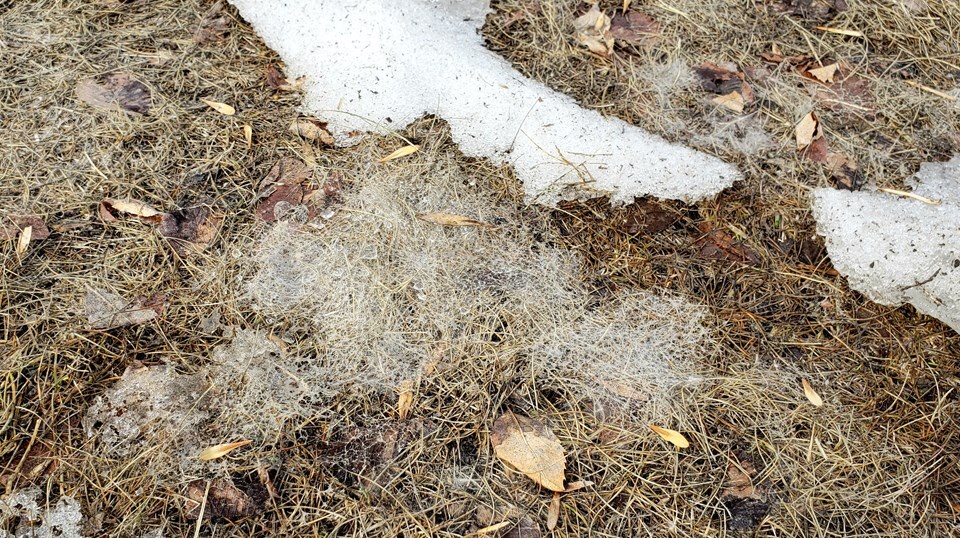
- Snow mould can leave matted grey, tan or pinkish patches after snowmelt, but visible damage varies.
- Many residential cases improve with gentle raking, drying and spring growth; treatment products are not automatically necessary.
- Wait for ground to dry before raking, and remove leaves and debris before winter to reduce wet material held against the grass.
As the heavy snowpack recedes in Edmonton around March, revealing a patchwork of brown, matted grass underfoot, it's a common heartbreak for homeowners. If your yard sports crusty, web-like circles in shades of grey or pink, you're likely dealing with snow mold—a fungal foe thriving in our Zone 4a climate. With long winters dumping over 100 cm of snow and dense clay soils that trap moisture like a sponge, Edmonton's lawns are prime targets.
At Neighbourhood Heroes, we've rescued countless yards in suburbs like Summerside, Windermere, and Terwillegar from this post-winter plague. As your student-run, electric-first lawn care team, we'll break down how to spot snow mold, treat it effectively, and prevent it next season—without harsh chemicals or guesswork.
What is Snow Mold?
Snow mold is a fungal infection that strikes turfgrass under prolonged snow cover, turning your lawn into a damp, dark incubator. It kicks in when wet leaves or early snowfalls create insulated moisture pockets, allowing fungi to spread. In Edmonton, prolonged snow cover, wet turf and poorly drained areas can increase the risk of snow mould. The amount of visible damage varies widely from lawn to lawn.
Pink vs. Gray Snow Mold: Key Differences
Edmonton sees both types, but knowing the difference guides your fix. Here's a quick comparison tailored to our local conditions:
| Type |
Appearance |
Severity |
Common Locations in Edmonton |
Causes Here |
| Gray Snow Mold (Typhula Blight) |
Greyish-white, crusty circular patches (up to 1m wide) with web-like matting |
Mild; damages blades only, roots recover |
Shaded spots under trees or near fences (e.g., Glenora backyards) |
Heavy snow on unfrozen ground; common after mild falls like 2025's. |
| Pink Snow Mold (Microdochium Patch) |
Pinkish or copper-tinted webs, sometimes with fuzzy borders |
Moderate to severe; can kill crowns/roots |
Low-lying areas with poor drainage (e.g., Riverbend or Mill Woods) |
Wet leaves + thaw cycles; persists into spring without snow. |
Pro Tip: Gently rake a patch—if it's superficial and the roots pull up green, it's gray. Pink often feels slimy and smells musty, signalling deeper damage.
3 Steps to Treat Snow Mold This Spring
No need for aggressive fungicides—nature and smart care handle most cases. Focus on drying and revival, especially in Edmonton's variable spring weather (aim for late March to May when temps hit 10-15°C).
- Gently Rake the Affected Areas: Use a lightweight leaf rake to break up matted grass and expose the soil. This lets air circulate and sunlight kill the fungus. Avoid heavy raking on wet clay—it compacts further. Do this on a dry day to prevent spreading spores.
- Promote Drying and Airflow: Let Edmonton's breezy springs do the work. Mow low (once grass greens up) to improve circulation, but skip if still soggy. For compacted spots, our deep-core aeration punches holes for better oxygen and drainage, accelerating recovery without heavy machinery.
- Nourish for Regrowth: Once dry, feed the roots to outpace damage. Granular fertilizers sit idle on crusty surfaces, but our fast-acting liquid lawn fertilization penetrates deep, delivering organic-inspired nutrients exactly where needed. Pair it with overseeding hardy Alberta blends for full revival.
How to Prevent Snow Mold Next Winter
Prevention beats cure in our harsh climate—start in fall to avoid spring surprises.
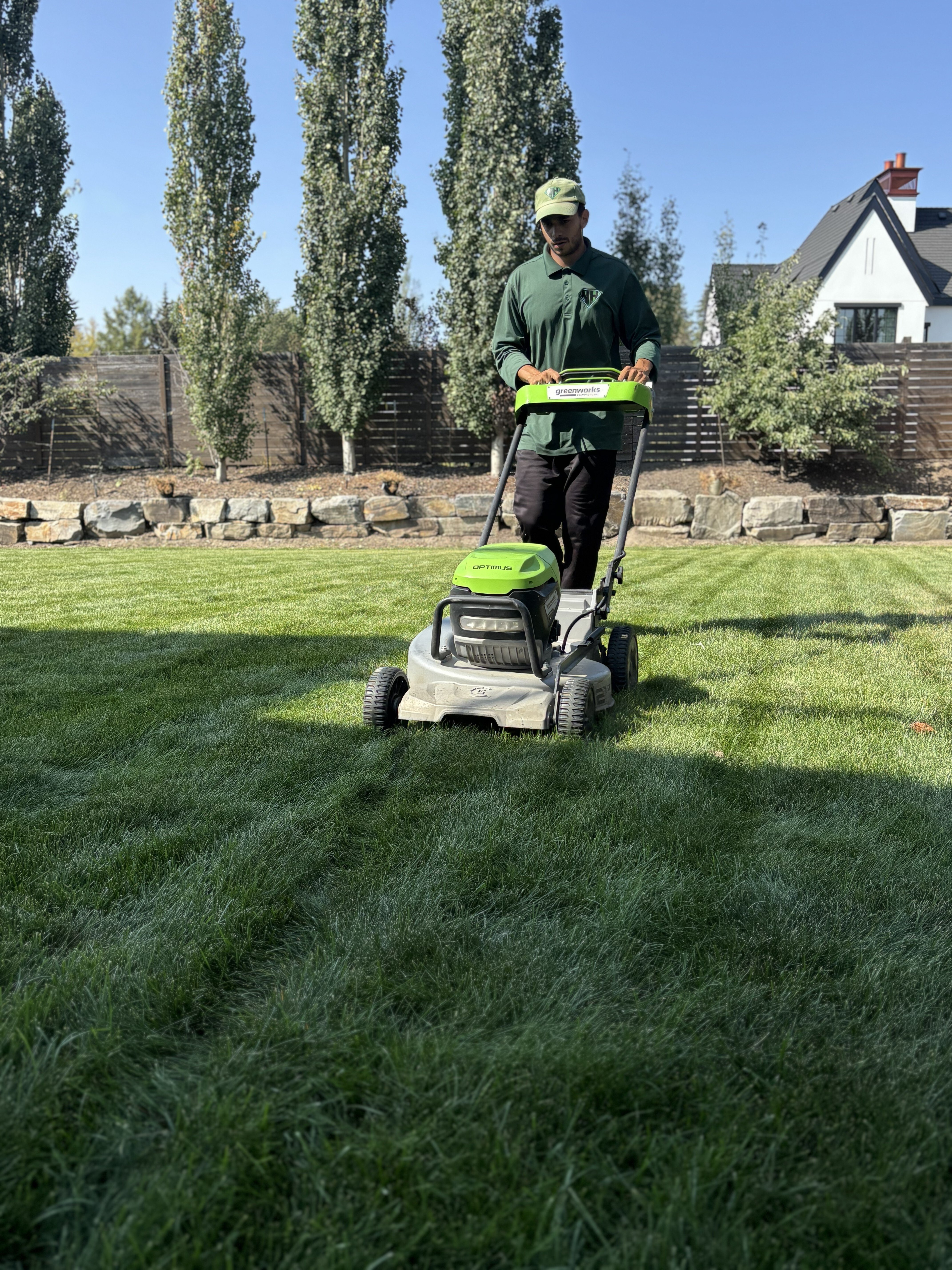
- Mow Consistently Until Dormancy: Keep grass at 2-3 inches heading into winter; long blades mat under snow. Our silent electric lawn mowing services maintain this without neighborhood noise complaints.
- Clear Leaves and Debris: Mulch or remove fallen leaves—don't let them blanket the lawn. This reduces the amount of wet, matted material sitting against the turf through winter.
- Improve Drainage and Prep: Aerate in September for better winter resilience. Avoid massive snow piles from shoveling; spread them thin to melt faster.
Let Neighbourhood Heroes Rescue Your Spring Lawn
Skip the DIY hassle—our electric-first approach reduces direct exhaust from equipment where electric tools are used while we focus on practical lawn recovery. Explore our lawn care services for recovery options, or compare our Edmonton lawn care packages. Healthy Greens includes fertilization and weed control; aeration, overseeding and mowing are available through other services or packages.
Ready to reclaim your yard? Contact us if you need help planning lawn recovery after winter damage.




No Comments Yet
Let us know what you think