Key Takeaways
- Separate public-road maintenance from private-property clearing. Maintain your driveway, steps, walks and adjacent sidewalk, and report unsafe roads through City channels.
- Clear fresh snow before compaction, preserve sightlines and keep cleared snow out of the roadway.
- Manage drainage so meltwater does not repeatedly cross paths and refreeze. Sand adds traction, while appropriate labelled de-icer can help loosen bonded ice.
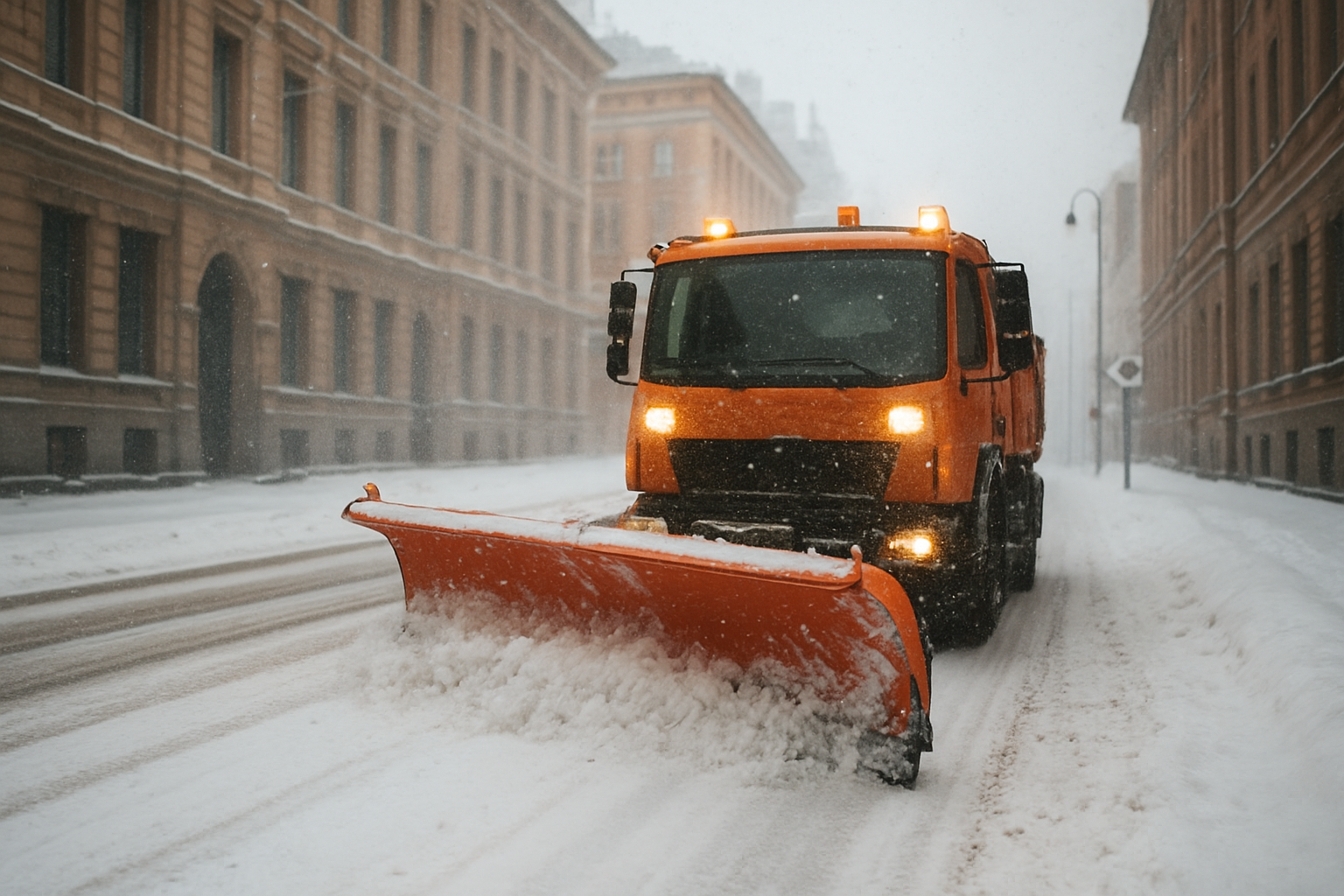
Icy public roads and icy areas on your property are two different responsibilities. The City of Edmonton manages public roadways. Homeowners can reduce risk on their own driveways, sidewalks and entrances, but should not treat a City street as an extension of their private snow-removal area.
1. Know What You Can Control
Focus on your driveway, front walk, steps and the adjacent sidewalk you are responsible for maintaining. If a public road is icy, rutted or unsafe, use the City of Edmonton's current road-maintenance and 311 reporting channels rather than applying private de-icer to the roadway.
2. Clear Private Surfaces Before Snow Compacts
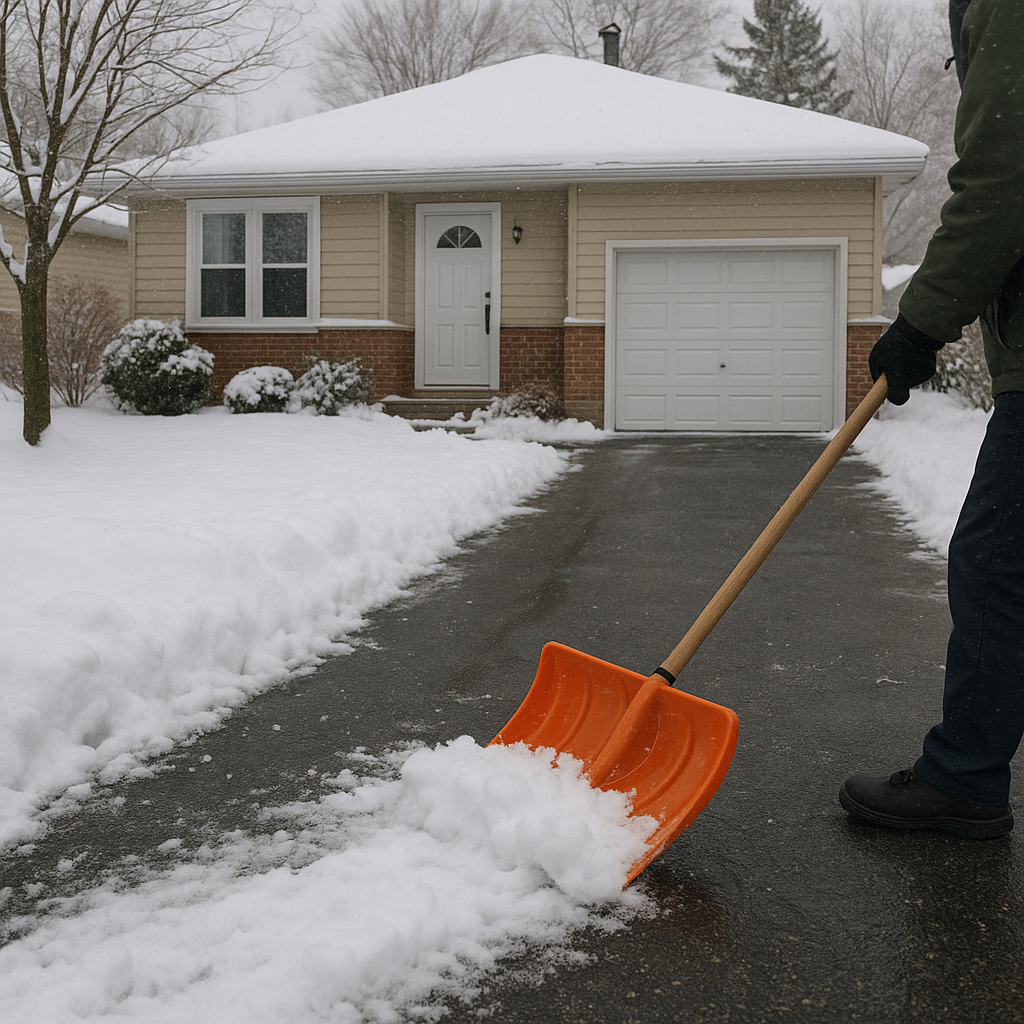
Fresh snow is easier to remove than snow that has been driven or walked on repeatedly. Clearing driveways and sidewalks promptly reduces one source of hard-packed snow and refreezing.
3. Manage the Driveway Entrance Carefully
The transition between a driveway and the street can become slippery because of vehicle traffic, meltwater and snow left by road clearing. Keep the private portion of the driveway clear and maintain sightlines, but do not push or blow snow into the public roadway.
4. Use Sand and De-Icer on Your Property, Not the Road
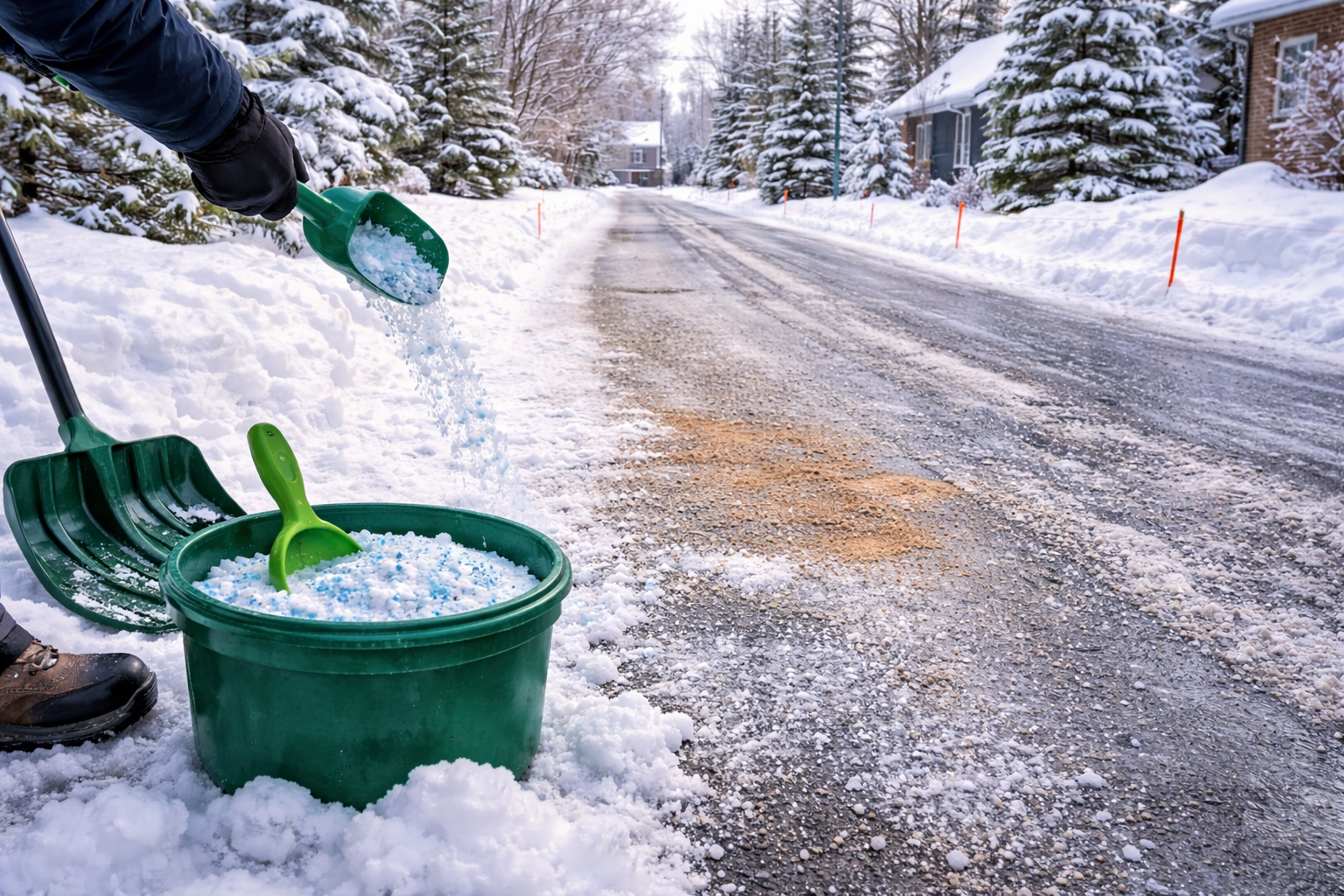
Sand can improve traction on private walking and driving surfaces. Ice melt can help loosen bonded ice when the product is appropriate for the surface and temperature.
Use the minimum effective amount and follow the label. Chloride-based products can affect concrete, metal, vegetation and waterways when overapplied.
5. Manage Drainage
Redirect downspouts and snow-storage areas so meltwater does not repeatedly flow across the driveway or sidewalk and refreeze. Do not create drainage changes that send water onto a public road or neighbouring property.
6. Protect Sightlines
Keep private snow piles low enough near the driveway entrance that they do not block your view of pedestrians or approaching vehicles. Avoid placing snow around signs, hydrants or other public infrastructure.
7. Drive for the Conditions
Winter road conditions can change quickly. Give yourself more stopping distance, reduce speed, avoid abrupt steering or braking and make sure the vehicle's tires are appropriate for winter conditions.
For current roadway conditions, closures or City service information, use official City and provincial transportation sources before travelling.
8. What Professional Snow Removal Can and Cannot Do
Neighbourhood Heroes can clear the private and adjacent sidewalk areas included in your residential package. We do not plow public residential streets.
Our current residential service dispatches at 0.5 cm of snowfall and for freezing-rain events, with route completion promised within 24 hours after the snowfall ends. Windrow clearing is not included.
Final Thoughts
The safest approach near an icy road is to separate public-road conditions from private-property maintenance. Keep your own access areas clear, preserve visibility, manage meltwater and report roadway problems through the appropriate City channel.
For private-property winter service, see our current snow-removal packages.


No Comments Yet
Let us know what you think