Lawn Recovery Questions Edmonton Homeowners Ask Every Spring
As the snow finally retreats, many Edmonton homeowners look at their patchy, brown lawn and ask the same question: Do chinch bugs come back after winter? If your turf struggled late last summer, it is natural to hope a deep freeze solved the problem for you.
Unfortunately, it usually does not work that way.
Some lawn pests survive winter surprisingly well. At the same time, not every ugly spring lawn is caused by insects. Brown patches can also result from snow mould, winter stress, compaction, or moisture issues that developed long before the grass had a chance to grow again.
Here is what actually survives the freeze, what may be damaging your lawn in spring, and how to help your grass recover properly in Edmonton.
Do Chinch Bugs Come Back After Winter?
Yes! Chinch bugs can come back after winter.
Adult chinch bugs do not usually disappear just because temperatures drop. Instead, they overwinter in protected areas like thick thatch, dense grass, leaf litter, and the edges of garden beds. When spring temperatures rise, they become active again and begin laying eggs once conditions are warm enough.
That means a cold winter does not guarantee a clean slate.
In some cases, winter can reduce chinch bug survival, especially during unusually cold and dry stretches with little snow cover. But in Edmonton, snow often acts like insulation. A steady snow layer helps protect dormant insects from extreme temperature swings, which gives some of them a better chance of surviving until spring.
So if you had chinch bug damage last year, there is a good chance the issue could return unless the lawn is properly repaired and monitored.
What Does Chinch Bug Damage Look Like in Spring?
Chinch bug damage is often confused with drought stress or general winter damage. That is part of what makes spring lawn diagnosis tricky.
Look for:
- Irregular yellow or brown patches
- Areas that look dry even after watering
- Thin turf that does not green up with warmer weather
- Patches that seemed stressed the previous summer or early fall
Chinch bugs feed near the crown of the grass and interfere with the plant's ability to transport water and nutrients. If turf was heavily damaged last season, those areas may remain brown in spring rather than bounce back on their own.
A good rule: if a patch struggled badly last year and still looks weak after spring moisture and warmer weather, it is worth taking a closer look.
Is It Really Chinch Bugs, or Something Else?
Not every brown patch in spring points to insects. In Edmonton, there are a few common causes of spring lawn damage, each requiring a different response.
1. Chinch Bug Damage
This usually shows up as expanding yellow-to-brown patches, often in sunny areas. It is commonly mistaken for underwatering because the grass looks dry and stressed.
Key clue: the damaged area often does not improve much with spring watering.
2. Snow Mould
Snow mould is a lawn disease that develops under long-lasting snow cover, especially when turf stays wet and matted for too long.
You may notice:
- Circular patches of flattened grass
- Gray or pink web-like growth right after snowmelt
- Matted turf that looks crusted together
Key clue: it appears soon after the snow melts and has a distinct matted look.
3. Winterkill
Winterkill is a physical grass injury caused by harsh winter conditions rather than pests or disease. It can happen when grass crowns take up water during a thaw and then freeze again, or when turf dries out from exposure and wind.
You may notice:
- Dead-looking patches after extreme winter swings
- Thin turf in exposed areas
- Delayed green-up without obvious fungal growth
Key clue: the damage is often tied to exposure, ice, freezing, or drying conditions rather than a spreading pattern.
Why Snow Cover Can Affect Spring Lawn Problems
Snow does more than cover the lawn. It changes the conditions underneath it.
A thick, lingering snow layer can:
- Protect overwintering insects
- Keep turf damp for too long
- Increase the risk of snow mould
- Delay spring drying and recovery
That is why winter conditions can affect what your lawn looks like months later.
In Edmonton, snow management matters too. Large, compacted snow piles left on lawn edges can keep sections of turf cold, wet, and buried longer than the rest of the yard. Those same sheltered areas can also create more favourable conditions for pests and diseases heading into spring.
Getting lingering piles to melt and clear more evenly can help the lawn dry out faster and reduce some of the stress that leads to spring problems.
How to Repair a Lawn After Winter Damage
If your lawn was hit by chinch bugs, snow mould, or winter stress, passive waiting usually is not enough. A damaged lawn recovers best when you help it breathe, thicken, and rebuild root strength.
Here is the spring recovery plan we recommend for lawns in Edmonton.
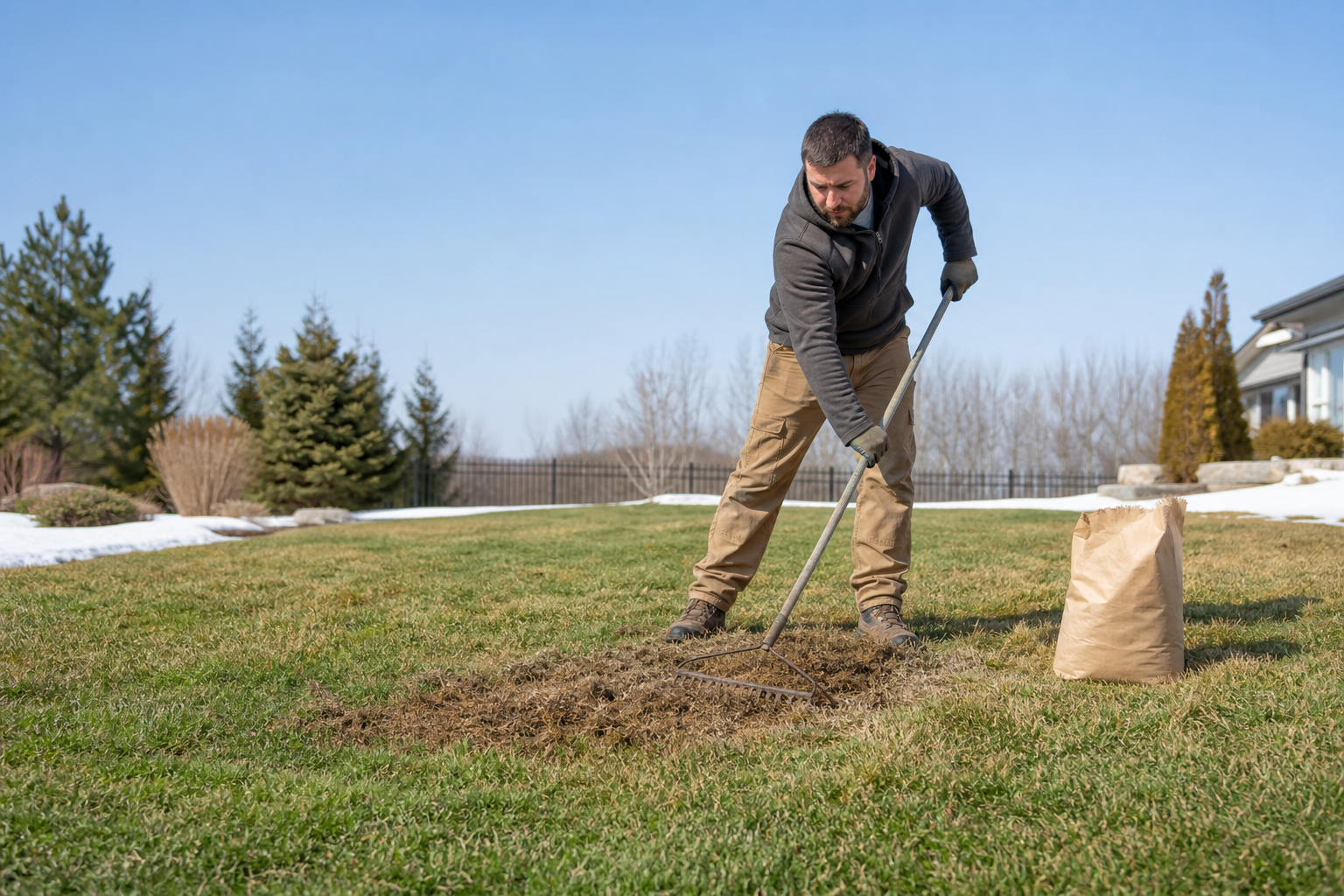
1. Rake Out Dead Material
Once the lawn is dry enough to work on, rake dead patches firmly to lift matted grass and remove built-up debris.
This helps by:
- Improving airflow
- Reducing excess moisture
- Exposing the soil surface
- Breaking up places where insects and disease can linger
If the lawn has a thick layer of thatch, this step becomes even more important.
2. Relieve Compaction With Aeration
Edmonton lawns often deal with compacted soil after a long winter. If the ground is dense, roots struggle to access air, water, and nutrients.
Deep-Core Aeration can help:
- Loosen compacted soil
- Improve water movement
- Support deeper rooting
- Create better conditions for overseeding
Not every lawn needs the same spring fix. Some need better airflow and root access through aeration, while others need thicker growth through overseeding or a broader seasonal care plan.
3. Overseed Bare or Thin Areas
Dead patches usually do not fill back in on their own fast enough to outcompete weeds. Overseeding helps re-establish density where turf has thinned out.
Focus on:
- Bare spots
- Weak areas that did not green up
- Thin sections left behind after raking
In Alberta, timing and watering matter just as much as seed choice. A thicker lawn is one of your best long-term defences against future surface-feeding insect pressure.
4. Water Properly, Not Excessively
One common mistake in spring is trying to force recovery with excessive watering. That often creates more problems than it solves.
Instead:
- Keep newly seeded areas consistently moist
- Avoid soaking the lawn every day once established
- Aim for deeper, steadier watering as the lawn matures
Too much moisture can encourage disease, especially in areas that are already slow to dry out after winter.
5. Watch the Lawn Before Assuming It Is Fixed
Spring recovery is gradual, especially in Edmonton’s colder climate. A lawn that looks rough in early spring is not always doomed, but it should improve as temperatures rise.
Watch for:
- Whether brown areas start filling in
- Whether patches stay dry-looking despite watering
- Whether thin areas are spreading
- Whether there are signs of repeated damage from last season
If the same spots struggle year after year, the issue may be larger than simple winter stress.
When Should You Worry About Chinch Bugs in Edmonton?
You should pay closer attention if:
- Your lawn had confirmed or suspected chinch bug damage last year
- The same sunny, stressed areas keep declining
- Brown patches return even after repair
- Watering does not improve the turf
- The lawn has a thick thatch layer
The earlier you identify the real cause, the better your odds of meaningful recovery.
How to Prevent Lawn Damage From Coming Back
The healthiest lawns are usually the most resilient lawns.
To lower the risk of repeat issues:
- Keep thatch under control
- Aerate compacted soil
- Overseed thin turf
- Water consistently, not excessively
- Address stressed areas before the summer heat arrives
- Maintain a thicker lawn so weeds and pests have fewer weak spots to exploit
A lawn that goes into summer thin and stressed is always more vulnerable than one that has been properly repaired in spring.
Final Thoughts: Do Chinch Bugs Come Back After Winter?
Yes, chinch bugs can survive winter and return in spring. But they are only one possible reason your lawn looks rough after snowmelt. In Edmonton, spring lawn damage can also come from snow mould, winter stress, compaction, and uneven snow conditions.
The key is to work with your lawn’s timing, not against it.
If your turf is struggling, start with the basics: rake out dead material, improve airflow, relieve compaction, and overseed where needed. A thicker, healthier lawn gives you the best chance at a stronger recovery through the rest of the season.
If you want help figuring out what your lawn actually needs this spring, contact our team. We will point you in the right direction.



-1.jpeg?width=479&height=417&name=images%20(22)-1.jpeg)